
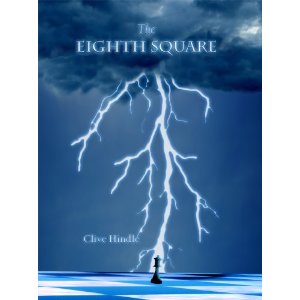
The Eighth Square

Book Review of Clive Hindle’s The Eighth Square

Janus Publishing Co. kindly sent me a copy of Clive Hindle’s The Eighth Square.

Description from Goodreads:
Jack Lauder, a man of simple pleasures, was a successful lawyer who enjoyed nothing more than climbing in the mountains and a good old competitive game of chess. But he is about to be dragged into a deadly world of deception, where truth and fiction become inseparable, and the life he knew will be changed forever. Somebody has a very personal vendetta against Jack and he must put all the pieces of the puzzle together to figure out why he is being framed. He finds himself caught up in a web of drug-smuggling and murder. In a haze of confusion, Jack will have to think several moves ahead to survive this hostile game against an opponent who will stop at nothing until Jack is annihilated.

The Eighth Square begins with Jack Lauder’s return to his legal practice. He is almost immediately commissioned to handle the post-humorous estate of an estranged acquaintance. From the very beginning this strikes him as strange and the impression is only amplified as the story progresses. It is pretty clear that Jack is wrapped up in something bigger than himself. The story progresses quickly as he tries desperately to extricate himself.

I liked the book. It moved along steadily, had some interesting characters and the dialogue felt natural. There were times when I was unsure if scenes were dreams, memories, or reality. I’m aware that neither was Jack some of the time, but as a reader I might have liked to know where I was standing a little more clearly. Not knowing made me uncomfortable.

It would also probably help if the reader had some knowledge of chess, rock climbing and/or sailing. I was able to follow and enjoy the story even though I don’t intuitively know which square on the chess board is is e4 or what the queen’s gambit looks like, what a pro does while one is climbing, or what it means to reef a sail. But someone who knows these things might have gotten even more from the story than I did.

As Jack tries to thinks five moves ahead of his opponent the story hangs more and more tenuously on coincidence and luck for Jack’s continued success. I didn’t find this particularly believable, if I’m honest, but I can’t say that it detracted too much from my enjoyment. It’s a good psychological thriller, set in interesting terrain, and I’m glad I got the opportunity to read it.
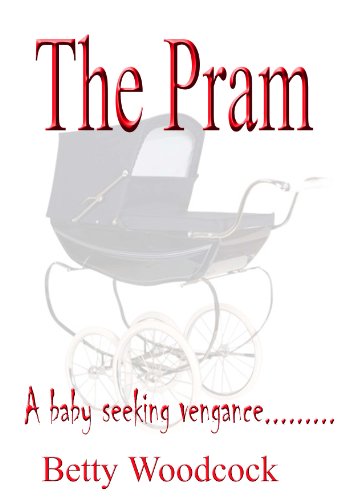
Book Review of Betty Woodcock’s The Pram

Author, Betty Woodcock, sent me a copy of her novel, The Pram. Honestly, I don’t find the cover too appealing, but it disguises a bit of a gem.

Description from Amazon:
When Carrie buys a secondhand pram for her eagerly awaited grandchild, she becomes trapped in a horrifying nightmare world, terrorised by her own aborted baby . . . already worried that only she can see the phantom baby in the pram, Carrie is appalled when her granddaughter is placed beside it and the two merge. Unsure if she has imagined this, she tells no one. And so her nightmare begins . . . She is shocked when the phantom converses with her in her mind . . . especially when it claims to be her own aborted child. Horrified, torn between a mix of love and revulsion for her grandchild and terror of the intimidating invading spirit, Carrie doesn’t know what to do. Then she begins to see ghosts, and is convinced she is losing her mind. The mind-to-mind conversations become menacing and Carrie panics and sometimes answers the baby aloud, causing misunderstandings with her daughter. She dreads that her grandchild will never outgrow this weirdness which is becoming terrifyingly entrenched. So when her long-ago lover’s unexpected return to her life coincides with vindictive blasts of pain in her head, she can’t resist asking for his advice. He is intrigued by Carrie’s heavily censored story, and too late, she realises she has made a mistake . . . he also has a genetic link to the malevolent She must keep them apart because neither of them know that he is the father.

Review
The Pram recounts the frightening experience of Carrie M. as she is terrorised by the ghost of her worst mistake. Told largely in the first person, The Pram drops the reader into the mind of the main character. While not a huge fan of first-person narratives, it is pretty effective in this particular case. It provides you with a very clear understanding of her thoughts, thought processes, worries, and very real fears as she tries to come to terms with the existence of what she considers to be an alien being within her grandchild. This inside knowledge did leave me feeling a little bit like Carrie made a snap decision about Baby, though. While this may, in fact, have been the right decision, in the end, she never once considered that the baby might be benign. She accepts that the other ghosts are and even takes Baby’s word for it, but she never pays Baby the same courtesy. This, coupled with the abrupt manner in which Carrie treats her daughter in order to disguise her dislike for the baby, left me disliking her. I get that she was terrified, and who can be expected to be at their best when in the grips of terror? I should give her a little leeway on the issue, but I still didn’t like her. In fact, I didn’t like most of the characters. I found Carrie’s daughter to be annoying and Gervaise false. I kept waiting for him to turn out to be the baddie somehow. But a person can like a book without liking the characters. Unlikeable characters are just as valuable as goodie-goodies. I think they seem more life-like.

The writing is clear and easy to follow. There are a few typos, but not enough to spoil the read. I considered it to be a really satisfying read, with one exception. Unless this is meant to be an allegory on the power of God (how he can easily accomplish what humans are unable to even when they try their hardest), the whole thing felt like it wrapped up a little too quickly and easily. All-in-all, it’s worth the read. I read it on an international flight, and it easily passed the time for me.

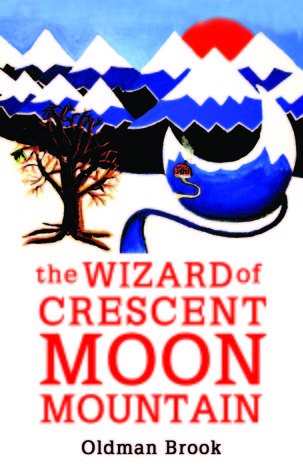
Book Review of The Wizard of Crescent Moon Mountain: Elven Resurrection

Oldman Brook (or his representative) sent me a beautiful copy of The Wizard of Crescent Moon Mountain: Elven Resurrection. I say beautiful because I really love the cover.

Description from Goodreads:
Elven boys Finn and Beezle enter a time portal just before their race is wiped out by an otherworldly warrior and his goblin army. Travelling 3,000 years into the future and arriving in snow-filled lands, the boys are saved from the cold by two shape-shifters sent by Greybeard, the wizard of Crescent Moon Mountain. Out of their time and depth, Finn and Beezle are enlisted to join Greybeard and his friends on a quest to save the world of Everlast from the very same otherworldly warrior….

Warning: Minor Spoiler

The Wizard of Crescent Moon Mountain: Elven Resurrection is an epic adventure very much in the style of Tolkien. Humans, elves, shape-shifters, dwarves, wizards, dragons, goblins and more vie for power and survival in the land of Everlast. Most of which contribute at least one colourful character to the cast of the book. I really found the characters themselves enjoyable, though I found their mannerism and flippant lack of sentiment toward their enemy equally disturbing. Let me elaborate (hopefully without spoilers). Greybeard and his crew set out on a quest to save the world essentially. Who is friend and who is foe is fairly clearly delineated. Warrior and his goblins are bad, Greybeard and his army are good. However, both sides treat the lives of the enemy with frightening disregard. This is, perhaps, to be expected in a dehumanised enemy, but not in those that are presented as the representative of the morally superior. An example: at one point the ‘good guys’ callously joke and laugh as they watch the enemy being incrementally and, almost certainly, painfully burned alive. Not funny and more to the point not appropriate in a children’s novel.

If  The Wizard of Crescent Moon Mountain was written for adults, who can be expected to think deeply about such things, I might find this ubiquitous callousness an interesting addition. It might prompt readers to remember that histories are written by victors, who have a tendency to gloss over the cruelties of their own. In a children’s novel, however, I find it dangerously close to suggesting that it is ok to kill another as long as they are an enemy, which is of course a subjective classification, making the actual lesson ‘it’s ok to kill just so long as you think you are on the right side.’ I have no doubt that the Hitler Youth were taught a very similar lesson along the way somewhere.

This is my only real complaint though. A whole host of varied and interesting characters are introduced in an unusual narrative. It is told in present tense, which takes some getting used to, but I liked it once I had. The writing is clean and uncluttered for easy reading, and though the first in a series, the book wraps up nicely so there aren’t any unbearable cliffhangers. Its well worth a read.