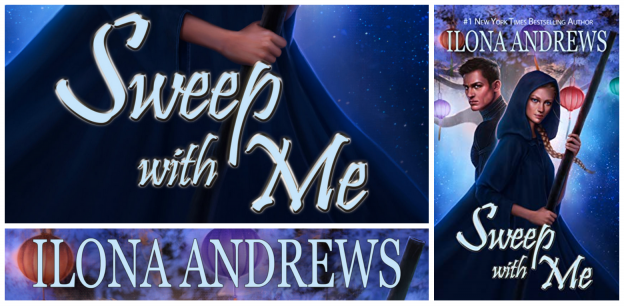
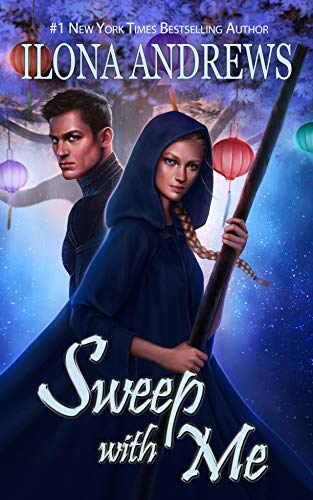
Thank you for joining us at Gertrude Hunt, the nicest Bed and Breakfast in Red Deer, Texas, during the Treaty Stay. As you know, we are honor-bound to accept all guests during this oldest of innkeeper holidays and we are expecting a dangerous guest. Or several. But have no fear. Your safety and comfort is our first priority. The inn and your hosts, Dina Demille and Sean Evans, will defend you at all costs. [But we hope we don’t have to.]
Every winter, Innkeepers look forward to celebrating their own special holiday, which commemorates the ancient treaty that united the very first Inns and established the rules that protect them, their intergalactic guests, and the very unaware/oblivious people of [planet] Earth. By tradition, the Innkeepers welcomed three guests: a warrior, a sage, and a pilgrim, but during the holiday, Innkeepers must open their doors to anyone who seeks lodging. Anyone.
All Dina hopes is that the guests conduct themselves in a polite manner. But what’s a holiday without at least one disaster?
This was another entertaining installment in the Innkeeper Chronicles. I feel like this one may have had less meat to it than some of the past books. Dina and Sean spend very little time together, which feels like a missed opportunity since this is where he joins her as an innkeeper. Plus, an awful lot of the page space (in this already short book) is dedicated to describing odd aliens and/or decor. But it was still fun to catch up with the Gertrude Hunt crew. I look forward to more in the future.
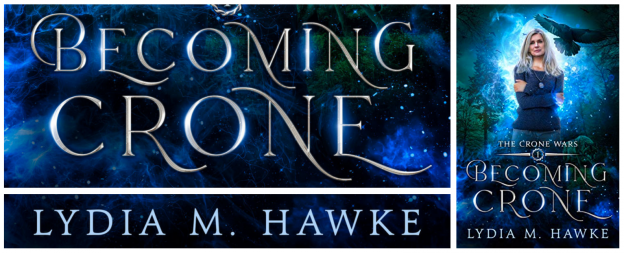
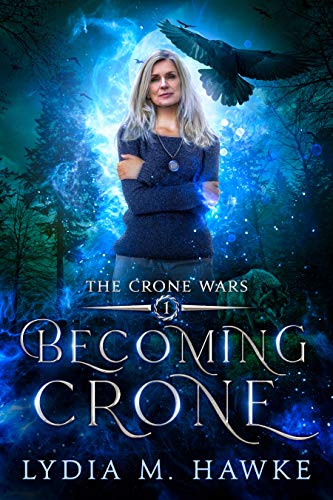
She wanted purpose. She found dark magick and war.
For Claire Emerson, there is nothing ordinary about turning sixty.
First, there are the crows. Then, a pendant that unlocks a gate to a house in the woods–which comes with a snarky gargoyle, an entirely too-sexy wolf shifter claiming to be Claire’s protector, and a legacy that turns her reality upside down.
Because divorced, menopausal grandmothers with creaky hips and hot flashes? They don’t just randomly discover they’re next in a long line of powerful women protecting the world from the dark magick of Mages.
Claire’s first instinct is to turn tail and run back to the safety of baking cookies and reading bedtime stories. But when it becomes clear the Mages have targeted her, she may have no choice but to accept her calling. There’s just one problem: she never got the lifetime of training she was supposed to have, and her magick is… well, unreliable would be an understatement.
With the Mages threatening everything she loves, can Claire learn what she needs to in time to become Crone? Or will she be the one to lose an ancient war—and her life?
While I liked this book, in the most general sense, I don’t suppose it’ll make much sense to say that I love that the is a book about a 60-year-old woman, but wish it was less about a 60-year-old woman. I really wanted Claire to be a badass woman who happened to be 60-years-old. Instead she’s a 60-year-old woman who happened to be badass (or was working towards becoming badass…ok, she wasn’t badass but has the potential to be in the future). And while that might seem like an impertinent difference, it wasn’t for me.
Too much of the book is “Woe is me, I’m 60,” “I need my reading glasses, I’m 60,” “My hips/ankles/toes/joints hurt, I’m 60,” “I haven’t had a libido for decades, I’m 60,” etc. I want 60-year-old heroines. But this book seemed to make being 60-years-old Claire’s whole personality. And that focus felt much more like… maybe tokenizism is the word I want, maybe. It certainly wasn’t a full engagement and purposeful subversion of society’s tendency to erase older women or truly encompassing and embracing the power of the crone. It 100% wasn’t making Claire feel anymore like a true, fleshed out character than the young Chosen Ones we all have read ad nauseam. All of which disappointed me.
I was also simply bored by a lot of this story. Claire doesn’t even come to accept her situation until past the 60% mark and all of the action is in the last 10% or so. Having said that, I like the idea of Claire and, if I accept that this first book set the stage and gave her the training and knowledge, I can hope that the next book in the series will be more interesting. The writing and editing is perfectly readable and the overarching plot has me curious. So, I think I’ll give book two a shot and see how it goes from there.
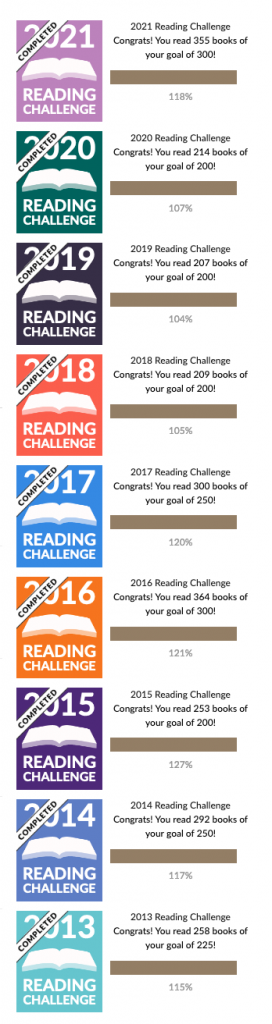
Do you ever have imaginary conversations with yourself? I found that I was doing that just now. I was explaining to myself how I can read 200-300+ books a year. As is so often the case, this came about completely randomly. I scrolled past this Instagram post:
And I thought, yep, there’s me the speed reader. But then I remembered passing this tweet a week or so earlier and thought, no that doesn’t really describe me:
Because I read fast, like really fast, but I can also tell you what color shirt Character A was wearing in chapter 11 and pick out underlying themes and tropes, etc. So, I’m obviously processing what I reading.
Someone on Goodreads once commented in a conversation “Wow, you’re a fast reader!” And then later complemented me with, “you assess the quality of books cogently and thoughtfully, and you have a very real, unaffected style of expressing yourself.”
Now, I’ll preen under that praise in general (even if it was quite a while ago). But the point of including it here is the assessing the quality of books cogently and thoughtfully. I think I do that, but at a volume of 200-300 books a year. Admittedly, I don’t give every book an equally in-depth and deeply thought out review. But I am reading each book thoroughly enough to understand them on a fairly complete level and I do it very quickly.
The question I was pondering today was how. And I think I have an answer. Though I’m no neurologist (or whichever -ologist would specialize in this field), so what I think is happening in my brain may be way off base. And even if I’m right, there are probably far better, more accurate ways to describe it. But I’m going to try and describe it.
All credit where credit is due, my feet were put on this path by my husband. Earlier this year (maybe late last year, time has no meaning anymore) I was grumbling to myself and him. I’d been filling out an online form and done it wrong, which I do as often as not. And I said something along the lines of, “I swear I didn’t used to be so bad at this. I have two Masters degrees for Christ’s sake. Surely I’m able to read a stupid form.” Very calmly, he said, “It’s because you don’t read.”
I blinked at him and went, “WTH, 300+ books a year says otherwise!” Now, I can’t remember every sentence that was exchanged, but the gist of what he said he’d observed me doing was that I don’t read a sentence by reading each word in that sentence (or instructions on a form). He was of the opinion that I read some of the words, maybe every third, and my brain simply fills in the rest—that I’m very good at extrapolating and filling in blanks. Predictably, I was incensed and responded, “I don’t do that!”
But as I paid attention over that next few days, I found that I kind of do do that. Maybe not that exactly, but some version of it. It explains why I can tell you what color shirt Character A is wearing in chapter 11, but 10 minutes after I finish a book I often can’t tell you the main character’s name. Because I don’t read “Sarah wore red.” My brain just filled in my mental place holder of Sarah and red.” I’m not wholly visual. So, I’m not claiming to have a full cinematic picture in my head, but that my brain gleans the information without acknowledging the letters making up words. Does that make sense?
And this even kind of makes sense when I think about being a child learning to read. I had a very, very hard time learning to read. I got pulled out of normal class for remedial reading lessons at school, my grandma bought me Hooked on Phonics (anyone remember those), my mom worked with me everyday after school. I really really struggled to read. And this lasted long enough and I was old enough that I actually remember the visceral feeling of it all finally snapping into focus and understanding at last.
I call it my Helen Keller moment. Certainly, it’s not as dramatic as someone who was blind and deaf finally making a connection with words and meaning.
But it is a stark and true moment in my mind. In my imagination, something physically snapped into place and I understood something that hadn’t seconds before. And after it did, within the same school year, I was moved from the remedial lessons to the advanced.
When I discuss those early years with my mom, she laughs and says, “Lord, you were as dyslexic as the day is long.” Now, I don’t think there really is any such thing as “were dyslexic.” I’m fairly sure you either are or you aren’t and it’s a constant. I think what she’s getting at is that whatever normal pathway a child’s brain forms when learning to read, mine just couldn’t. There was an impediment of some sort. I imagine a road that normally follows a straight line, but in my case had to curve around a bolder. It took longer because it had to find and forge a new way. And because of that, the scenery is also a little different than other people’s. My ‘reading’ doesn’t work exactly like other people’s ‘reading.’ When my brain couldn’t make it work the ‘right’ way, it found an alternative way.
This is where an -ology would come in handy. I have no idea if that’s accurate. But it’s how I imagine it. And if the way my mind found was to read the parts of a sentence that make sense and fill the rest in (and to have gotten really good and accurate at it over time), well that makes sense to me too. As does being fast because it’s not reading/processing each individual word. And predictably, it works a lot better with fiction than forms.
None of this is something I do purposefully. It’s just how I read. I don’t know any other way to do it. I literally don’t know how to slow down.
So, there’s my totally random, possibly ill-conceived rambling post for today. Enjoy.