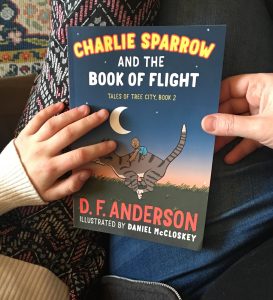
 I won a copy of Charlie Sparrow and the Book of Flight, by D. F. Anderson and Daniel McCloskey,
Description:
Charlie Sparrow is the only bird in Tree City who can fly, but Mayor Peck insists he’s faking it. When Charlie learns of a book proving the truth about flight, he leaves Tree City to find it, facing a sharp-beaked thug and a den of mythical bird-eating creatures with claws and whiskers. With the help of his friends, Charlie discovers deeply held secrets about the mayor that must be exposed for the citizens of Tree City to wake up to their birthright—flight.
Daughter’s Review:
I really liked it, it was cute. I love how determined Charlie was. It was a good lesson. I liked the part where he became friends with the cat. I’m ten-years-old and I could read it pretty quickly. I think it would be better for kids a little younger than me, but I drew a picture of it.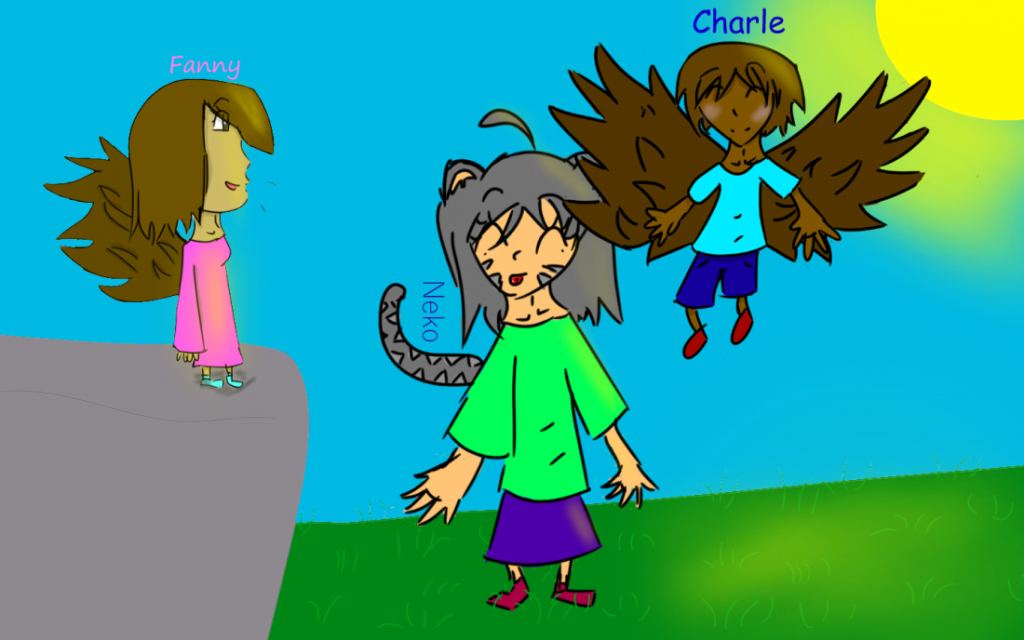
My Review:
I often find reviewing children’s books more difficult that reviewing adult books. It’s hard to let go of adult expectations and accept books the way a child will. My daughter didn’t wonder how these anthropomorphized birds developed cameras, but didn’t understand the mechanics of flight. She didn’t ponder the Book of Flight’s origins, or if the birds in the rest of the world could fly (and if so, why they never happened to fly by Tree City). She was able and happily willing to simply accept the story as presented, even the bits that don’t make sense. Because they don’t have to for a child.
This book is intended for children between 6 and 9. For that age range it works. For a 40-year-old, maybe not so much. But what does that matter? It’s clean, easily readable and full of enough pictures to support the story, without cluttering the narrative. It’s book two in the series, but stands alone. We’d obviously missed out on how Charlie learned to fly and some of the history, but nothing that impeded the enjoyment of the story in any way. All in all, my children liked it and that’s all that really mattered.
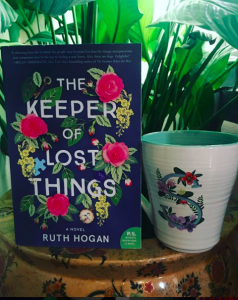 I bought a copy of
  .
.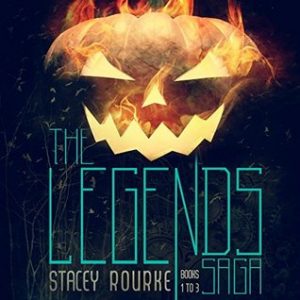 I received an Audible copy of
  for review.
 Pretty good. I finished the book still confused about some of the hows and whys of both the Horseman and the ghosts’ reenactments, it’s a bit hand-wavy, but I enjoyed my time with the characters (Ireland more than Ichabod). The loves are both a tad too insta-love for me, but there were hints that there might be a reason for this (some draw) that will be revealed in future books, so I’ll forgive it. The dialogue and writing were witty and the narrator did a nice job with them. I liked her voice for the modern characters a lot more than the historic ones, but I think some of the reason might have been because they were written to be more formal (fewer contractions and such). All in all, enjoyable and I look forward to more.
 While not bad, I didn’t enjoy this one anywhere near as much as the first. It picked up directly after the end of book one, but I generally felt like the characters randomly went to meet some guy, who randomly had a tragedy befall him, and they all randomly went about trying to save the day. I actually wondered if I’d missed a chapter or two in there at some point, because it seemed to jump about. It was still funny and the characters dropped lots of witty one-liners and I liked the pop culture references. Further, I listened to the Audio version and the narrator did a nice job. So, again, not bad, but a disappointment after book one.
 I wouldn’t go so far as to say this is bad, but I do feel like the series has run farther and farther off the tracks with each book. At the end of each subsequent book, I’ve been left with more questions than at the end of the previous one. As always, I thought Rourke’s writing was easy to read (or listen to in my case, since I had the audio) and all the sarcasm and pop culture references are funny. But I never felt connected to this story. Why, the crew went along with Well’s plan, for example, was a nagging question. Why introduce characters that were never more than props, was another. And I also thought that pulling the legends of the Horseman and Poe away from the mystical and giving them human(ish) origins diminished them. Basically, while finely written I just didn’t like it very much.