Category Archives: Challenges

Treasure Tide

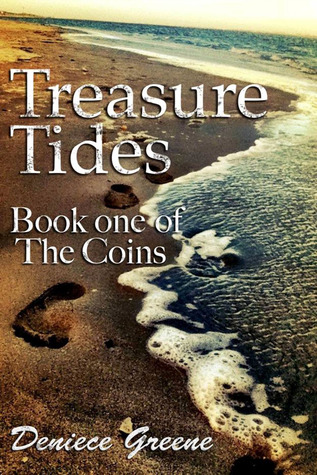
Book Review of Deniece Greene’s Treasure Tide (The Coins #1)

Treasure Tides

I downloaded Denice Greene‘s PNR novel, Treasure Tides from the KDP list. At the time of posting this review it was still free.

Description from Goodreads:
Becki Stephens is living the dream in a beach house along the coast of South Carolina. A diving expedition leads to the discovery of more than sharks’ teeth when she discovers a crate on the ocean floor…Becki’s world is about to change in ways she never dreamed possible. Her crate holds secrets she may not be able to handle, and a man who steals her heart the first moment she sees him… walking naked through her living room!

Review:
Before I say anything more let me say that I liked the story of this book. I want that said first because I also have a boatload of complaints, but while I might grouse about certain things I don’t want them to overshadow the basic fact that I liked the book well enough. 

It had a fun premise and a couple interesting twists in the plot. It also had a lot of strong male characters who considered it important to protect the women in their lives. And who can’t approve of that? Most of those women were children, nieces and sisters but a few were of the mating sort. I appreciated this about Kurt, Landon and Royce. They took their fatherly roles seriously (even if they weren’t strictly fathers of the girls/women under their care). It was nice to know that the girls were so loved, but it got old quick. Contradictorily, I liked that they were the type to try and be paternalistic and overly protective, but hated that they were allowed to indulge in the behaviour at the same time.

The main heroine, Becky, would have been easy to relate to if her character hadn’t so persistently chipped away at any respect I had for her. I started out thinking she was a spunky woman. Then she went and fell into a passionate kiss with the frighteningly large naked stranger she found in her living room roughly 45 seconds after meeting him, told the same naked man he couldn’t stay the night and then relented because she was afraid of a little thunder and lightning. (Really? How very cliché.) She ruined perfectly strong coffee with unprecedented amounts of cinnamon creamer and whipped cream from a can (eww) and she allowed all of the men in her life to order her around.

I would ask why, but it was perfectly in keeping with the infantile persona applied to her. She stuck her tongue out at people, threw tantrums, cried at the drop of a hat, liked to play in fountains, jumped too quickly to conclusions, apparently loved sweets (since she was constantly buying or making them), and could relate far too easily with her 12,14, and 16 year old cousins. At one point her mother was even supposed to have described  her as  ‘reaching for her independence.’ She’s 22! If she hasn’t yet reached for and found at least a little independence there’s a problem. If I’m honest all of the women were a little weak, weepy, and in need of male protection–even when described as strong. Eventually it started to feel just a little condescending.

In the end I gave up liking Becky. Joanne fared a little better. I liked her alright, at least she was portrayed as victim instead of a child. But still, there it was, the fragile broken women in need of a big strong man to protect her. Then there was Natie. She didn’t need to be protected at least…nope, she needed to be rescued. But that’s apparently a story for another book. Other that being a lead in for a sequel she seemed to have no purpose in this book what-so-ever.

None of that is my main complaint, however. What irritated me most of all was that just about everything in this book was said at least two times. To call it repetitive just doesn’t seem accurate enough. Everything from narrative descriptions of the team Royce heads, to explanations of familial relationships, to Becky’s hatred of mornings, to Royce and Becky’s instant lust/instant hate/instant love/instant hate/instant comfortable couple holding hands on the porch swing like they’ve known each other for 20 years is repeated ad nauseam. (And that’s just on the first day.) It does smooth out 50 or so percent of the way through, but by then I was just about ready to give up. 

Lastly, there were some formatting and editing issues. I’m always reluctant to mention formatting in case it’s actually my device that is at fault instead of the file, but in this case there didn’t seem to be any sort of paragraph identification. Neither indentations nor hard returns between paragraphs were regularly present. That made it a little hard to read at times and I don’t think my Kindle could cause that. 

I want to conclude as I started. I had a lot of grievances with this novel, but it was still a fun story. I did like some of the characters. Yes they were almost all male, but that means that there were characters I liked. Landon especially seemed to resonate with me, as did Trevor and the ‘gentlemen’. (I don’t want to give anything away.) Plus it’s set in Charleston, SC, a city with a lot of interesting architecture and history. You gotta love that. It’s also a really clean read. There isn’t anything any racier than a deep kiss. 
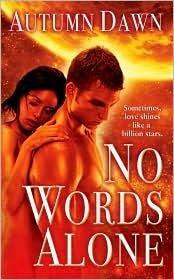
Book Review of Autumn Dawn’s No Words Alone (Sparks, #1)

No Words Alone

I grabbed Autumn Dawn‘s Science Fiction Romance, No Words Alone, off of the KDP free list.

Description from Goodreads:
As the only woman in a team of marooned explorers, whom do you trust–your friends…or your enemy?

When Xera is stranded on a desert planet with a hostile crew and a cadre of murdering aliens, her friends aren’t who she thinks they are. As the translator, she’s the only one who can forge a truce. As the only woman, she’s the prize they lust for, and when her captain turns on her, she’s going to need the help of her enemies to escape his wrath.

Because on this inhospitable world, the warlike Scorpio were her only chance. Looking into the fiery eyes of their handsome leader, Xera saw a nobility and potency she’d never before encountered–a reaction she knew her fellow humans would despise. A future with Commander Ryven was…something to consider. But first they had to survive.

Review:
For the most part I enjoyed this book. It starts out by introducing us to Xera and her crew mates. They’re in a bit of a tight spot, having crash-landed on a hostile planet with the enemy. It’s tense, but the two groups need each-other to survive. It all felt a little reminiscent of the movie Pitch Black really—the beasts come out at night and all. Shortly thereafter Xera’s thoughts, quite reasonably, turn to her very specific danger as the only woman among a group of unknown, probably dangerous alien males and the definitely not all together trustworthy men of her own crew. Lucky for Xera the enemy captain, Ryven, seems to have a soft spot for women and sees to her safety.

I had a few issues though. I say Xera’s fears were reasonable and they were (almost any woman would recognise them), but part of me had to wonder how likely it would be for a woman to be on the crew in the first place if the risk was so real. There really is something to be said for not PUTTING YOURSELF into dangerous situations. Ryven was wonderful. He was smart, ruthless, kind, and loyal. He seemed to understand human nature enough to recognise the signs of danger in Xera’s crew. The problem was there wasn’t any reason he should understand human nature. He’s a Scorpio and Scorpio men apparently aren’t anything like human men.

I liked this beginning far better than the rest of the book if I’m honest. The beginning is Sci-fi, the rest is predominantly romance. Yes they go out on the occasional space ship and encounter the occasional hostile alien, but it’s mostly about Xera, Ryven and the process of Xera settling into her new life with Ryven. I like a good romance as much as the next person but this one has all the hallmarks of being too positive. Too positive? Yes, too positive. A totally hot, kind, considerate, rich, heir to government falls in love with Xera on sight, then rescues her and takes her home to his wonderful family, who welcome her with open arms. She helps the downtrodden princess, thumbs her nose at local gender expectations without repercussions, and despite being an alien from a trespassing race is accepted by the populace at large. Granted, she wasn’t really given any choice in the matter of marriage, but could it really all of been so painless? She never even bothered to fight it.

The problem with narratives of this sort is that you know in advance that nothing really bad is going to happen. Everything will work out in her favour one way or another, be it realistic or not. That takes a lot of the suspense out of the story. I also was extremely saddened to think that even after humanity colonises the stars basic patriarchal attitudes towards women and sexual virtue would still hold such a strangle hold on Xera.

Having made my complaints I have to reiterate that I did enjoy the read. I liked almost all of the Scorpio men. Xera was easy to relate to, and the book was well written, without too many editorial mishaps. If I see the sequel on the free list I’ll definitely grab them.

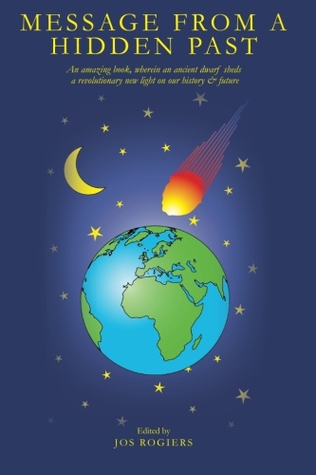
Review of Message From a Hidden Past, by Jos Rogiers

Message From a Hidden PastEditor Jos Rogiers sent me a copy of Message From a Hidden Past….or, more completely, Message from a Hidden Past: An amazing book, wherein an ancient dwarf sheds a revolutionary new light on our history & future. I’m not sure if that’s all meant to be title or not, though.

Description from Amazon:
More than 3,200 years ago, a learned dwarf was pricked with the Sleeping Thorn and fell into a deep slumber in a secret cave somewhere on Earth. When he finally awoke, towards the end of 2009 or in the early part of 2010, he started to carry out the task he was charged with by his king: to reveal the truth about a hidden chapter of our past, that misunderstood period of our history when the so-called “gods” held sway over the world. He wrote an amazing book about this subject, a book that throws a completely new light on world history and human existence: “Message from a Hidden Past.” According to the author, the gods were neither supernatural beings nor products of the human imagination, let alone extraterrestrials. He describes them as hominids of flesh and blood, belonging to the further evolved species of Homo supersapiens. They were smarter, taller, and much more beautiful than humans. They were the true founders of civilization. The book explains their origins, describes their culture, and pictures the land in which they lived. Most revealing, it relates how the gods became involved with humans and the disastrous consequences of that fateful interaction. The dwarf recounts the story of a great world war that took place at the end of the Bronze Age and of an epic calamity that finally extinguished the Era of the Gods. Despite their physical destruction, the lore and images of the gods lived on in poetry, song, and myth. The book’s last chapters deal with what remains of them today, and discuss ancient prophecies that foretell their return at an uncertain date in the future.

Review:
Having just read the final page of this book, I am tempted to lean my head back, sigh, and say, ‘Finally, I’m finally finished with this book.’ But that just wouldn’t be fair to it. It really is well written, well-researched, and has an interesting premise. The problem is that I just couldn’t hustle up any real enthusiasm for it and found myself chipping away at it between things I would rather have been reading. I’m generally a literary monogamist, preferring to read only one book at a time, but in the time it took me to get this one read I also read over a dozen other books. 

After quite a bit of self-reflection, I decided that my primary complaint was that I didn’t know the intent of the book. Is it meant to be a fictional account of an alternative past, a true account using an interesting narrative technique of a learned dwarf to relay its information, or taken at face value, and the reader is expected to believe that a 3000-year-old dwarf is kindly passing his knowledge to the lowly human race. I just don’t know and that bothered me…a lot. The result is that as I read the book, I didn’t know how to mentally catalog the information presented to me. I don’t mean to suggest that I have any sort of Hannibal Lecter-like memorization method, but like most humans, I do have a certain mental organization that requires at least a modicum of labeling. I just didn’t know where to put this book or its information…or should I say its story. See I’m still not sure, even having finished it.

Having said that, the author (whomever he may be) does an amazing job of running a single continuous thread through the history and mythology of most of the world. The legends he managed to make fairly convincing arguments of similar geneses are incredibly diverse. He supports a lot of his argument with linguistics, entomology, and a number of texts from Classic Antiquity. Some of this made for pretty dry reading, especially in the beginning, but it was interesting to see where he would go with it.

I’ll also concede that the book has a noble aim, and I’m not trying to suggest that it doesn’t accomplish its goals. As our learned dwarf narrator discusses the world prior to the assention of homo sapiens he does highlight in relief what some might consider the proper way to live. I, however, found the whole thing horribly condescending. Maybe it’s a form of speciesism, but I had a distinct problem with the fact that the ‘gods’ or homo supersapiens outperformed humans (more accurately, homo sapiens, but we’ll go with human for simplicities sake) in everything when the basis for superiority was on such base human standards. There was the appreciation of visual and harmonic symmetry or beauty, honesty, trustworthiness, and adherence to a moral and societal norm, not to mention the law. Then there was their appreciation of gold and gems. It was all just too human.

Further, up until the end of the book, where the narrator speaks of gods in the context of modern religions, I thought that if the reader replaced the words homo supersapien with White Man and homo sapiens with Black Man (or any other two races/nationalities/etc.) it would all still have been disconcertingly familiar. I’m not saying that this author intended this in any way, but am rather making a comparison. In both cases, the argument is being, or sadly has been, made that a superior race took a ‘lesser’ race under their wing and modernized, civilized, or improved them. I’m just not comfortable with that discussion, regardless of what species is involved.

My discomfort only increased when the result of the interaction between the two species had such a devastating effect on the first as if to suggest that the separation of the two groups would have been better from the beginning. Again, I’m not trying to say that the book had any racist, nationalist, or ethnocentric undertones. The narrator isn’t even supposed to be human, let alone have an opinion on such things. But there was a definite feeling of haughty arrogance on the part of the dwarf (on behalf of the gods), and humans were certainly not part of the ‘in-crowd.’

I get it. If we could all just behave more like the gods and less like humans, the world would be better off. That’s probably a true statement. Unfortunately for us, according to the narrator, humans just don’t have what it takes. We’re biologically inferior. There is no assertion of different but equal in this book. Instead, there is a very firm value judgment, and in our modern age of subjectivity and liberalism, this is a rare and dangerous thing.

I’ll be the first to say there are times in which uncomfortable, even dangerous, discussions have to take place for the betterment of mankind. But if, as suggested here,  our deficiency is in our genetics instead of our cultures, then we can’t correct it. We’re not gods. We never will be (barring some interesting reincarnations) so I’m left wanting for a solution. Perhaps I’ve taken an unusually negative view of all of this. I’d be interested to see what others think.