Sheep’s Clothing

Book Review of Sheep’s Clothing, by Elizabeth Einspanier

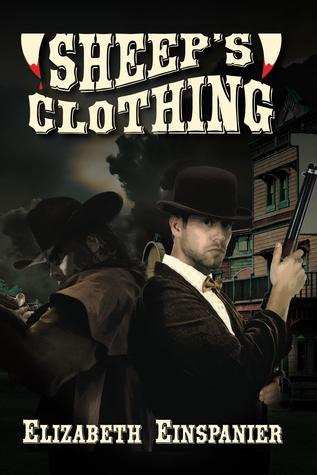
Sheep's ClothingBook ten of my Taking Care of my Own challenge: Sheep’s Clothing, by  Elizabeth Einspanier. After seeing Ms. E.’s post on ReviewSeekers, I got it free from Amazon and at the time of posting it was still free.

Description from Goodreads:
It is the year 1874.

Doc Meadows, frontier doctor working in the small town of Salvation, has always considered himself a sensible man, and has not believed in monsters for a long time. When injured half-Indian Wolf Cowrie staggers into his practice one night, however, he brings terrifying news–a vampire he hunts plans to settle in Salvation and turn it into his own private larder. Now Doc has to overcome his skepticism and fear in order to face down this new threat to his town, before Salvation becomes just another ghost town in the territories.

Sheep’s Clothing hearkens back to early depictions of vampires as bloodthirsty, charismatic monsters, borrowing more strongly from Dracula than more common modern interpretations.

Review:
I found this an enjoyable old-school vampire book, the kind where vampires are soulless evil beasts, bent on human destruction. The inclusion of a skinwalker, instead of a werewolf was an interesting twist on the age-old vampire/werewolf divide (as well as an ingenious way to position the story in the Wild West) and I liked Doc and Wolf. (I was especially amused by their particularly descriptive names.) All in all, a success in my opinion.

The very description says the book takes a lot from Dracula and it’s not kidding. Little things like the two women traveling with Russeau being referred to as his ‘brides’— not his wives or his women or his companions, but his ‘brides,’ just like Draculas’. I see this as taking language from a previous story instead of just mythological bases, like the need to sleep on home soil, for example. For me it was a little too much. It made it feel much more like fan-fiction than a separate vampire tale using original material. This was a shame but a relatively small matter.

Additionally, while I appreciated seeing a more traditional vampire, the whole ‘brides of Dracula’ thing was my least favourite aspect of Stoker’s book. (Ok, the worship of Mina’s apparent purity and basic flawlessness was my least favourite part, but beyond that, the oversexed, volition-less, singleminded female servants of Dracula were my next least favourite part.) Unfortunately, that carries over here too. The women are ‘his,’ ‘bound to him’ and apparently serving no purpose beyond shadowing him and fulfilling any ‘bride’ duty an immortal might feel the need to keep a couple complacent women about for. Meh. But again, a relatively small matter.

What wasn’t a small matter for me, was that people accepted the existence of vampires with startling ease. I actually liked that in 1874 the uneducated masses didn’t even know what a vampire was. But not a single person (even the man who had just been told he was now nothing more than a reanimated dead, severed head) freaked out at any point. Seriously, these people were calm and collected at every turn. Unrealistic doesn’t begin to cover it. This was a fairly massive detraction for me.

I also thought that it lacked some character development, especially in Wolf. He’s on a pretty drastic mission, for an important and personal reason but we’re just told bla, bla, bla and move on. I didn’t ‘feel’ him or his pain at all and I needed to have. Russeau was also defeated really easily in the end.

The writing is really good, though. The use of regional accents gives it a little flare without going overboard to become annoying and it’s well edited and readable. Well worth picking up.

Dancing With Gravity

Book Review of Dancing With Gravity, by Anene Tressler

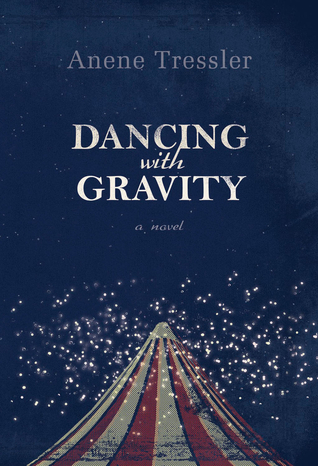
Dancing With GravityBook number nine of my Taking Care of My Own challenge is Dancing with Gravity, by Anene Tressler. She isn’t actually a Goodreads friend. As far as I can see she doesn’t even have an account. (How is that possible?) But I met her at a mutual friend’s Christmas party and she’s a really cool woman. In fact, as soon as I got home I rushed to Amazon to buy her book. I just kept putting off reading it because it’s not SciFi or Fantasy and I’m so addicted to these genres.

Description from Goodreads:
Father Samuel Whiting does not set out to be a hero. He doesn’t want to save the world or even save the day. Instead, he simply exists, asleep in his own life, adrift in a loneliness of his own creation. And then the circus comes to town and his self-imposed isolation is shattered. As he gradually awakens to a world of possibility, he embarks on the hero’s journey of discovery through the uncharted terrain of his own heart. His is a tale of insecurity and false hopes, of self-absorption and self-denial, of reaching out and falling short. It is a tale of struggling with integrity and striving for valor by someone who, if left to his own devices, would willingly remain an extra in his own life. Finally, blinded by self-delusion and at the brink of despair, a challenge to serve changes everything he believes about the true cost of love.

Review:

I should start by mentioning that I’m not at all religious (academically interested, but not a believer in any of the Books), so I was admittedly a little skeptical about reading a story with a priest as the main character.  However, though there are a few homilies here and there and Whiting’s faith is an important aspect of the book, I didn’t feel preached at or that the book’s main intent was actually to ‘spread the good word’ or revel in the mutual beliefs of the author and reader. (Both of which I have a pretty low tolerance for.)

I actually quite enjoyed Whiting’s story…no, enjoy isn’t the right word because this is one of those books that is good, but an uncomfortable read. Another reviewer called it emotionally draining and that’s a good way to say it. It’s draining, but it’s worth the cringe moments for the way it humanised priests. They’re often just reduced to caricatures of their collar, especially in these post abuse-scandal days. Whiting is having personal issues, but the last thing he could ever be called is a predator. The book doesn’t go there AT ALL.

This isn’t really a story about a circus. In fact, Whiting doesn’t even meet the circus performers until 35% into the book and he doesn’t get to know any of them until closer to 60%. It’s not really a story about one man’s desire to rediscover the value of his calling or vocation either, though it’s touched on. This is a story of one man’s almost unconscious search for meaning in his life.

He’s having a bit of a midlife crisis, not that he realises that and it takes the form of ‘love’—deep, passionate, obsessive, self-absorbed, utterly extinguishable ‘love’…twice in a matter of days. The story really is watching his internal struggles.

At one point Whiting says to another character, “You always make me sound so naïve.” She responds that he isn’t, but he is. It part of what makes him so loveable. He’s naïve, but not stupidly so. He’s just more inclined to see the good in a person or circumstance than the potential for harm, even when it’s obvious.

In the beginning he reminded me of Prince Myshkin from Dostoyevsky‘s The Idiot, full of emotional reflection and genuine good will, but a step removed from social understanding and therefore often confused and deceived (if only by himself) and therefore deemed deficient. 

By the end however, he was differnt. He’d been broken and reformed to become something else, something more. And it was a painful, if unacknowledged, process for everyone involved. There were also some very real consequences of his actions, inactions and inattentions. His transformation was subtle, but oh so real.

The writing was marvellous. It matched the tone of the book wonderfully. I did think that some of the internal thoughts were disruptive. Not all of them, most played an important role in letting us in on Father Whiting’s mental state. The man started the book fragile; I mean he’s a mental and emotional basket-case. I don’t mean crazy, but he overanalyses everything, second guesses himself constantly, and is overly aware of his own social awkwardness (thereby, of course, making it significantly worse).

The internal (and occasional external) monologues are important, but other ones aren’t. There are times he does things like make a cup of tea, thinks, “tea will make it better” and then sits to drink his tea. The thought is redundant and breaks the narrative. There were a number of these sorts of little internal snippets that I could have done without. But for the most part, it was well written, engaging and thought provoking.

If you’re looking for a strong, character driven novel this is a good one to pick up. It’s not an easy-breezy book, but not all of them should be.

Eye of the Storm

Book Review of Eye of the Storm, by Aimee Kuzenski

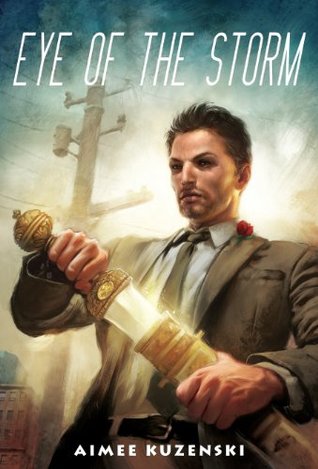
Eye of the StormI received a copy of Aimee Kuzenki‘s Eye of the Storm from NetGalley. Reading it now was a bit of a cheat, since I’m only supposed to be reading books by authors I know this month. But, I gave in to reading it in the end.

Description from Goodreads:
The old gods aren’t gone. Whether you know it or not, they’re closer than a breath upon your cheek.

Alexander Sekhmet keeps to himself, far from the Machiavellian games played by his Family, and as a result he’s led a quiet ordered life. Until now.

When his legendary temper is exploited by an ancient enemy, tricking him into destroying his human identity, he takes drastic steps to protect his empire. He possesses the body of Camilla Sykes, a West Point lieutenant, and takes her identity, memories…and soul with him.

Ian Dorsey, Classics PhD candidate, has lost his job and his father in one fiery afternoon, and appears to be losing his mind in the bargain. Why else is he hearing voices that are telling him to kill his father’s client? Or are the voices coming from somewhere darker?
When gods and mortals meet, the Apocalypse follows.

Review:
This is Urban Fantasy at its best…and it really is Urban Fantasy. There is no sex and only the merest hint of a possible future (F/F) romance, so not to be confused with PNR.

Kusenski does a fabulous job of creating atmosphere and presenting the immortal gods as both all-powerful and oddly fragile. I really adored this about War. Conversely, there was nothing fragile about Camilla. But I loved her just as much. She truly was the strong female character I’m always looking for and finding myself frustrated in her absence.

There is also some marvellous dialogue. A lot of it is internal, either with oneself or with a subsumed personality, but it’s largely followable. There were numerous scenes in which characters were simultaneously holding conversations and remembering past events or conversations and sometimes it was hard to tell which passages were meant to be remembrances and which were meant to be realtime. But other than this, I thought dialogue was sharp and natural sounding. It really was a pleasure to read.

My only real complaints are that the ending felt rushed. I didn’t quite follow War’s leap of logic that brought about the conclusion. It felt very abrupt. (Though, to be fair, War was presented as a man who regularly acts before he thinks things through.) I also thought that some of the side characters, like Ian or Olivia, who played fairly important roles, felt hollow. IMO, they weren’t fleshed out enough for their significance.

All in all, I really enjoyed it and will be looking for more of Ms. Kuzenski’s writing.