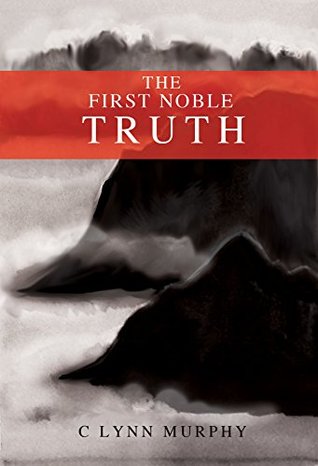
This blog is probably 99% reviews I write about other books. My own attempt at authorship hovers up in the right-hand corner under the tab The Weeping Empress, but it gets very little attention. I hardly remember the last time I even looked at it, let alone anyone else, if my page stats are reliable.
And I’m a slow writer. I’ve yet to develop the ability to force my writing, to produce quantity regardless of my own mental state. (I’ve recently decided that this is the illusive difference between a writer and an author, even if only in my own mind.) But it took me a while to recognise this about myself. On finishing my first book, I honestly thought, ‘I’ve got this. I’ll be cranking the books out now.’ That didn’t happen.
My writing is very tied into my own emotions. As an example, at the deepest level, The Weeping Empress is about a woman losing her family. I wrote it not long after having my first child, while struggling (largely in my subconscious, I think) with the fear of failing at motherhood and, contradictorily, being anchored in a way I never had been before. The Weeping Empress was partly a way to explore those feelings and emotions.
So, while I initially intended this blog to be about writing, rather about my writing, that never developed. Instead, it focuses primarily on the writing of others and that’s fine. I imagine that I’ll one day have another book to promote, but until then I’m ok dedicating it to others.
But I had an experience today that brought me up short. As is often the case with sudden ‘Ah-Ha’ moments, it was initiated by something small. I was responding to a review comment on Goodreads and I referenced the ‘games some indie authors play.’ I was referring to buying reviews, swapping reviews with other authors, using sock puppets, etc. And I realised something,
Three years ago, when I was brand new to the indie world and didn’t know the rules or the ins and outs or the, lets face it, dangers of the game I had more than a few narrow misses. I mean, I was just so dumb, so naive. I remember the first time I ran across a service offering to connect authors with reader/reviewers for a small processing fee and thinking how convenient that was. (It was Rooster Someting-or-other, I think, and I only remember that because I recall thinking how little roosters had to do with reviews.) It never occurred to me that this was anything other than what it honestly purported to be. That you were just buying false reviews never even entered my mind as a possibility. It is only luck and empty coffers that kept me from falling into that trap.
But I didn’t make it through that first few months without making mistakes. I was bright eyed and innocent, believing only the best of people and I’m embarrassed to admit that I did agree to swap two reviews with other authors on Goodreads. I played the same game I was earlier today sneering about (how easy it is to forget). I simply didn’t know better yet and I imagine a lot of others don’t at first, either.
In my case, I accepted both of the books at the same time, labouring under the assumption that you really could honestly read and review the book of a fellow writer, while they read yours and expect the same honesty in return. And you can be honest on your end, I did, but it’s difficult.
I quickly learned this was something I never wanted to do again, because I couldn’t know the other person’s true intent. When I sat at my computer, with both books downloaded and ready to be read, I realised that I truly only wanted an honest opinion from the other authors and they told me they wanted the same. But did they really, or where they just parroting what they were expected to say and wanting guaranteed praise? What would they provide me?
I became very uncomfortable with the position I had gotten myself into. I decided that my best bet was to get my reviews up first, that way I didn’t have to consider their opinion of my own work when I wrote it and, pending the books weren’t really masterpieces worthy of honest 5-star reviews, the other authors would see my honesty and respond in kind. Because what I couldn’t control was their expectations or actions, so the best I could do was lead by example.
I read those books in record time and gave both books 4 stars. I believe they deserved them. Both authors subsequently gave my book 5 stars and I’m hoping that was their honest opinion, but I hate that I can never be sure.
But here I am, almost three years later wishing they didn’t exist. I’ve made no effort to hide them, but should someone choose to dig into my book’s reviews there they would be, evidence of my wrong-doing. As I’ve just finished telling someone else, ignorance of the rules of engagement isn’t an excuse for breaking them and I did. So, now what?
Granted, it was several years ago and The Weeping Empress is hardly a best seller. It’s only received two reviews and seven contentless ratings in the past year. It doesn’t get much attention. But I’m a self-published author and what I understand now, that I didn’t then, is that the only thing I have to legitimise myself, is not reviews, as so many believe, but my reputation and evidence of integrity. And these two review swaps compromise that.
Please don’t misunderstand me. I don’t just mean to infer that I’m afraid to get caught and therefore wish the evidence wasn’t apparent. (Calling attention to them would be the worst thing I could do then.) Nor do I mean this as an attempt to mitigate their damage by admitting to them. (Three years later is a little too tardy for that to be effective.)
I mean I wish I hadn’t done it, that I had made it through the publication of my first book without falling for all the rhetoric about reviews being the only way a self-published author can succeed and they, therefore, must do anything to gain them. I wish I had been better, that I had understood that my credibility was at stake and just stood proudly by the quality of my work to garner readers. It’s not faultless, but doesn’t need bolstering either. I wish that I hadn’t listened to all those pulpiteers, who claim that a good book could never be enough.
But that’s confidence is very hard to come by as a brand new self-published author. You’re so scared that you’ve overstepped your bounds and made claims of grandeur you don’t deserve. This is especially hard for women, I think, who aren’t generally encouraged by society to promote themselves like men are.
And there is so much bad advice out there. We’ve seen a whole spat of it lately. Until you’ve spent time in the indie community, it’s impossible to weed through it. It just is and few newcomers have the wherewithal to dismiss the supposed sage advice of more experienced indies. I can say all that now. Three years isn’t a lot of time, but it’s enough for me to have learned some very valuable lessons and to realise I made some real mistakes.
The one piece of advice I wish I had been given is, ‘Unless you intend to literally release your book blind and not promote or follow its progress at all, don’t publish anything until you’ve spent at least a year interacting with the community you’re publishing to.’ This seems counter-intuitive, I know. You should be writing good books and trusting them to stand on their own, without the need for you to intercede on their behalf, and that’s true. But as long as you’re also a reader and/or also intend to promote your work, you need to understand the environment you’ll be functioning in. Not doing so can be detrimental to you and it will certainly cause you undue stress.
Getting back to my own swapped reviews, the whole thing is complicated by the fact that I also like to read fellow authors. I do a yearly Taking Care of My Own reading challenge, in which I set aside a period of time to read books written by my Goodreads friends.
It’s a bit awkward at times, as I’ve not at all enjoyed some of their books and said so (here’s an example, or maybe I mean proof), but I believe all the social networking in the world is useless unless someone somewhere chooses to make use of it. So, I read books by people I know. I don’t tell the authors beforehand that I’m reading their books and my reviews are always honest, but my choice of what to read is based on personal familiarity. And some of those authors do the same kind of thing.
Further, if I happen notice an author has reviewed my book well on Goodreads (because, ideally all authors are also readers) and their book is of a similar genre, I assume we have similar tastes and I’d likely enjoy their book too. (And I think others do this as well. Here’s a similar example.)
So, there are reviews of my book by authors I’ve also reviewed, but never communicated with. Both reviews are unprompted and unaffected by the other. They’re also sometimes years apart. But to an outsider, they could easily look like a review swap and there’s not a thing I can do about it. I mean, how believable is, ‘Sure, I’ve done review swaps, but not with that author.’? Not very.
So, yeah, I’m worrying and feeling guilty about something that will likely never come to pass. Why would someone really want to dig into the origins of every review some random, obscure book has received? (Except, I suppose, that I just suggested someone do exactly that.) Heck, I may even be worrying about next to nothing. I stopped reading my book’s reviews years ago. I read them the first several months after it was released, because I was terrified that it wouldn’t be accepted in some manner. But as soon as those first-time jitters that wracked me day and night settled and I knew the book was at least passing, I stopped reading them.
I had to check special to even say how many reviews it had received last year. So I don’t know how many books I’ve read that were written by people who’ve read mine and I’m not going to go mining for the information. But I assume there are several. My corner of the Goodreads community, despite being 20+ million strong, isn’t really that big.
But the niggle of these two reviews is still there in the back of my mind and I’ve spent quite a lot of time trying to find a way to negate it, without contacting the authors and asking that they remove them. That feels too controlling, like all those authors trying to tell reviewers how to review. Especially since it’s obvious from the reviews that they legitimately read the book. I, for one, like a review posted for every book I read and would take unkindly to an author asking me to remove one. Which also means I don’t want to delete my own review either. Plus, this would feel a bit like I’d reneged on something, since I did agree to the swap in the first place. There is also the problem that while I’m not hiding that two of my reviews were swaps, I don’t know the other authors’ situations and don’t want to inadvertently put them in any kind of compromising position.
What I came up with was posting a note below the review stating that it was one of two review swaps the author, myself, engaged it. Maybe even a link to this post. I’ll probably still do that, because I get a little tetchy when I feel I’m being less than honest with people.
But I also had a second realisation. It actually came about as I added a parenthetical clause to a sentence, stating that I didn’t care if a review for a particular author might have originated from a review swap. I had to stop and consider why I felt that way and I decided it’s because such a review is only one of many.
A book’s rating is intended to be an average and, as with any average, the aggregation of all of them tends to smooth out any irregularities. So, a review swap or two, or a review from someone’s mom or best friend gets averaged in with X number of other rating/reviews and as long as we’re talking about a small fraction of the number of rating/reviews, it’s not really misleading future readers or causing significant problems, as far as I’m concerned.
I actually surprised myself with this opinion (and it is only my opinion). I’m not excusing large swaths of misbehaviour. Buying reviews is still bad. Sock-puppets are still deplorable. If you only have 10 reviews and 8 of them are from friends, this is squinky. But I am saying that one or two legitimate swaps among a large number of reviews is something I, personally, am willing to tolerate. This is undoubtedly, at least partially because I’ve made the same mistake and understand how easily a new author is led to believe this is their only option for success.
There are others who don’t share my opinion and may even take exception for me expressing it, since it runs counter to current acceptable norms. Heck, I may even find myself called a hypocrite or the subject of the next Badly Behaving, Untrustable Author hoo-ha. I’m not trying to make a generalisable statement. And I’ll emphasise that those with differing opinions on what they consider acceptable or not are wholly correct too. What’s more, the general attitude toward review swapping is a negative one. It’s not a good way to get your book ahead. That’s part of why I regret my two. All I’m saying is I personally am willing to forgive others who’ve made the same mistake in the past and I hope they too learn from them.
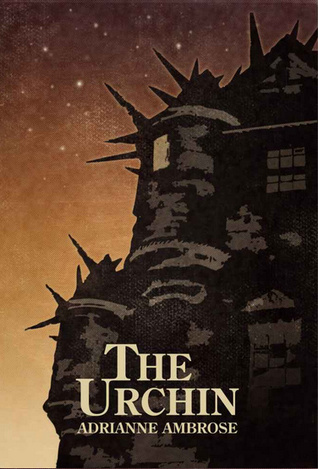 I nabbed a copy of Adrianne Ambrose’s book, The Urchin, from the Amazon free list.