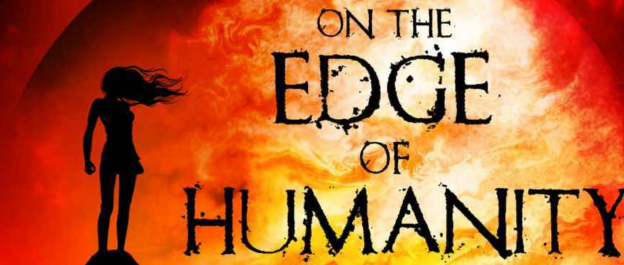
on the edge of hunamity

Book Review of S.B. Alexander’s On the Edge of Humanity

On the Edge of Humanity

I grabbed S.B. Alexander‘s Vampire SEAL novel On the Edge of Humanity from the Amazon KDP list.

Description from Goodreads:
Sixteen-year-old Jo Mason is lost in a world where traipsing from one foster home to another is normal. She hates her life, she hates school and on most days, she hates living. If it weren’t for her twin brother Sam, she may already be dead. 

Her normal world shifts one hundred and eighty degrees when she discovers her own blood tastes like candy and her eyes change colors like a mood ring. On top of that, her eyesight seems to be failing when she spies an otherworldly man sporting bloodstained canines trying to strangle a cop. The developments are shrouded when Sam goes missing between Anger Management class and History class. 

She’s called to the principal’s office to meet Lieutenant Webb London, a Navy SEAL who is part of a secret team of natural-born vampires. His mission is to protect the twins from an evil cartel, but he’s too late. With Jo now under his protection, his team searches for Sam. 

However, finding and rescuing Sam from the evil cartel may be the easy part. Jo learns she carries a dormant vampire gene that, if activated, could save him. As her normal world fades even more, pushing her closer to the edge of humanity, Jo must decide if her human life is more important than her twin brother. 

With time as her enemy, she struggles to make a life-changing decision for both her and Sam.

Review:
I have to be honest. Even though I can’t really fault the writing of this book I didn’t like it. I lost count of how many aspects of it I just personally didn’t like. That’s not to say others wouldn’t, or that it isn’t actually a good book, but I didn’t like it. Lets start and I’ll explain why.

First off, given the series title, Vampire SEALs, I was expecting at least a little vampire/military badassness. I read the description and knew that wasn’t going to be the main focus, but I expected some. There wasn’t any. This is a YA book about one scared little girl’s attempt come to terms with her situation. Major disappointment right there.

Next, Jo simply didn’t DO anything of substance. She asked a lot of ineffectual questions, whined, and vomited a lot. That’s about it. The realm of action was left entirely to the males. Even Ben, the token human, feeble as his attempts might have been, came out fighting. Jo just stood around and waited to be told what to do. This extended even as far as her own feelings. As an example, when she showed any anger toward her father he responded as such: “I lost both of you once and I don’t want to screw this up again. I have a chance to get to know my daughter and possibly my son. So call me selfish if you want to, but don’t ever, ever disrespect me again.” However, when Sam woke up equally as angry with dear old dad he was allowed to have a fist fight with him. People actually stood back and let them hash it out.

Sam was allowed expression and possession of his own emotions. Like a child, Jo was chastised or physically restrained anytime she expressed anything but compliance. This paternalistic infantilization was further enhanced by the constant act of putting a finger under her chin to force her to look up at someone. I think every male character in the book did it to her at least once. Everyone of them apparently has more control over where she looks than she does. I wanted to vomit myself.

I mentioned ineffectual questions. Jo asked questions constantly, good ones too a lot of times. But was almost never answered. Yea, I get it. She was dealing with a top secret organisation so some things would remain secretive, but I got seriously sick of being denied information. Because, of course, as a reader I was left without the information just as often as Jo was. (As a side note, Sam got all of his answers almost without having to ask and Ben seemed to often have things explained to him.) On the flip side, Jo also constantly asked herself questions along the lines of, ‘How did my life get here?’ There were so many of them I wanted to scream. Add the rhetorical questions, which are of course unanswered, to the ones the SEALs didn’t answer and you probably have half the book right there. It didn’t leave me feeling particularly satisfied.

Then there is the fact that the book started with an attempted rape. I wasn’t yet invested enough in the book to sit comfortably through that. I obviously made it through, but barely. It seemed to be a running theme that Jo attracted creeps and that Sam was constantly having to protect her from them. (Notice the continued helpless theme there?) But Jo somehow managed to hang tenaciously to her “I’m ugly” mantra, even in the face of evidence to the contrary.

So to conclude, I disliked the book. I didn’t enjoy it, but those things that irked me so badly are almost all personal preference kind of things. I hate seeing female characters patronised. It almost always rubs me the wrong way. That may not be the case for someone else, so I’ll still give the book three stars.
rainwater

Book Review of Sandra Brown’s Rainwater

Rainwater

I won a signed copy of Sandra Brown‘s novel Rainwater from a Goodreads Firstreads giveaway.

Description:
The year is 1934. With the country in the stranglehold of drought and economic depression, Ella Barron runs her Texas boardinghouse with an efficiency that ensures her life will be kept in balance. Between chores of cooking and cleaning for her residents, she cares for her ten-year-old son, Solly, a sweet but challenging child whose misunderstood behavior finds Ella on the receiving end of pity, derision, and suspicion. When David Rainwater arrives at the house looking for lodging, he comes recommended by a trusted friend as “a man of impeccable character.” But Ella senses that admitting Mr. Rainwater will bring about unsettling changes.

However, times are hard, and in order to make ends meet, Ella’s house must remain one hundred percent occupied. So Mr. Rainwater moves into her house…and impacts her life in ways Ella could never have foreseen….

Review:
Anyone who reads many of my reviews knows that I read a lot more fantasy/Sci-fi than I do literary fiction, but even I need a little variety every now and then. I won this last year and felt guilt about it still sitting on my shelf, so I decided to finally give it a read. I’m glad to have read it now that I have, even if it is one of those Depression era novels where even the happy endings are heart rending and sad. Having said that I did generally like it. Mostly because Mr. Rainwater was every bit the honourable gentleman of my dreams. He was wonderful. It would be awful hard not to like him. I liked Mrs. Barron, Margaret and the Doctor too, but it was Rainwater who stole the show. Guess that’s why the book’s named after him, huh?

This is the first Sandra Brown novel I’ve read and according to the acknowledges is a departure from her normal stories. She can sure write though. The prose of this book is beautiful and evocative. She manages to relate a lot of emotion in relatively few words. Small movements on the part of the characters relay a lot of meaning. Even though I had a fairly good idea of where the plot was going to end up (one way or another) I still hung on every word until I got there. Would be more than happy to read another of Mrs. Brown’s books.

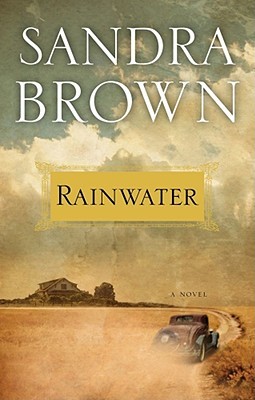
On a totally unrelated point, I read the hardback edition and it is a beautifully put together book. I love the cover image and the addition of the little bit of fancy gold edging around the title and the deckle edging of the pages.

The Shield

Book Review of Peter Evan Jones’ The Shield

The Shield

I grabbed Peter Jones’ post-apocalyptic, military sci-fi novel, The Shield, off of the Amazon KDP list.

Description from Goodreads:
As a Shield, William Grayson’s entire life centered around combat training for the sole purpose of protecting the Circle. To him there was nothing else in life, no other temptations, no goals, no dreams of family. He and the other Shields were trained warriors; a tolerated, necessary evil in a world where the only religion was peace. Aside from them, hundreds of years had passed since humans had engaged in any type of war, aggression, or even self-defense. The Last War had consumed the entire planet, destroying nearly everyone and everything. The fleeting remains of humanity had managed to rebuild the Twelve Cities focused entirely on establishing a peaceful people and a peaceful planet.

When the aliens came, they had no intention on participating in this utopia humans had spent centuries perfecting.

Grayson and the few remaining Shields must train and lead the very society that before had considered them a nuisance. Forced to reconcile new emotions he was forever immune to, and to engage those who hated what he stood for, Grayson must learn to go beyond his training as he slowly realizes that he is now responsible for not only the liberation of his planet, but to bring a new definition of life to every last human.

Review:
This book has an interesting premise. I love the ironic social implications of a group of elite soldiers defending the peaceful ways of a society they can obviously never be part of. Some of the most moving lines of the book come from Grayson (usually just referred to as The Shield) in reference to his role. I have to be honest though, I had a hard time believing humans could ever be so peaceful. It just seems to go against our very nature and, of course, the existence of the Shields speaks to that fact. I’m willing to accept for the sake of fiction, however, that such a society was established in the wake of a devastating world war and as such would be wholly unprepared to face a hostile invading force.

But in the end I simply expected more from the book than I got. It’s not that it’s short on action. It isn’t. The aliens invade and Grayson moves from one problem to the next until the book ends. I don’t think the man ever slept. But I kept looking for an underlying moral to the story, or something other than just the day to day travails of one group of people left behind. The closest I could come would be the dangers all encompassing peace or the importance of the military establishment. Neither of which I think were intended messages, which left the book feeling a little hollow to me. All of the soldiering was interesting enough and I really like Grayson, but so what? That really wasn’t enough to really grab me. Perhaps the sequel, The Shield: Redemption, will bring it all together.

My main disappointment was the ending. It ends on a cliffhanger, which is another way of saying it doesn’t in fact end. There is also no real crescendo. It is well written though. There are a few abrupt changes in POV and I found it a little repetitive. (Each time a new character was introduced we needed to be told what they thought of the Shields, which essentially rehashed the same old same old.) But all-in-all I found it enjoyable.
