Category Archives: Challenges

Ascension

Book Review of Ascension (The Demon Hunters, #1), by A.S. Fenichel

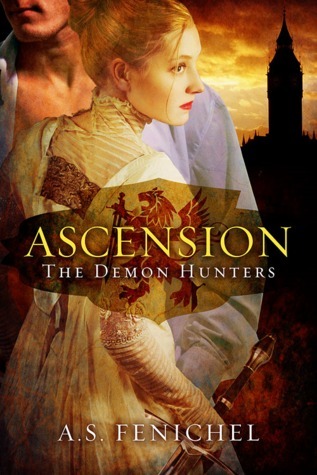
AscensionI picked up a copy of A. S. Fenichel‘s Ascension from the Amazon free list.

Description from Goodreads:
When demons threaten London, Lady Belinda answers the call.

Lord Gabriel Thurston returns home from war to find his fiancée is not the sweet young girl he left behind. She’s grown into a mysterious woman who guards her dark secrets well. When he sees her sneaking away from a ball, he’s convinced it’s for a lover’s rendezvous. Following her to London’s slums, Gabriel watches in horror as his fiancée ruthlessly slay a man.

Lady Belinda Carlisle’s only concern was her dress for the next ball—until demons nearly killed her and changed everything. A lady by day, and a demon hunter by night, she knows where her duty lies. Ending her betrothal is the best way to protect Gabriel from death by a demon’s hand.

Gabriel soon realizes, like him, Belinda has been fighting for her country. He joins in the fight, determined to show her that their love can endure, stronger than ever.

Review:
I will warn you in advance that this ‘review’ is going to be at least half rant, and not of the fangirl variety.

For me this book was a fail, fail, fail. It is so completely anachronistic as to be all but unreadable. Honestly, the only reason I made it to the end (and it was often in doubt that I would) was so that I could write a complete review of it.

Lets start with the sex, shall we, since there was so much more than the plot could reasonably support. It was a painful exercise in contradictions. You had the expected wide-eyed, innocent virgin who asked some version of ‘what was that?’ when she had an orgasm and inquires if a man’s will too—so, essentially the cliché, child-like lack of knowledge about her own body. Gag. But she also acknowledged and was familiar with the feelings in her stomach and loins, the pooling of heat, bla, bla, bla (this tended to happen randomly and in completely non-erotic settings, such that it felt quite jarring) and she was completely without shame, embarrassment or timidity when it came to sex. I’m pretty sure a character needs to be one or the other, both doesn’t jell.

Or how about the nude, outdoor anal play, instigated by her, on their second time together. Let me remind you, this was an unmarried, virginal member of the ton in Regency England. Even if she was a member of the Company and had accepted the equal status of men and women therein (which, lets face it, couldn’t actually exist in Regency England, as it would require an entire unlearning and relearning of gender and class norms of the time) there was still nothing in her position and upbringing that would allow that to occur with complete aplomb.

Nor his for that matter, there was no reason to think he, who’d also been raised in the same sexually repressed era, would look at his virginal (ok, they’d had sex once) fiancé and think nothing of (and expect her to think nothing of) shoving a finger up her ass. Seriously!

And even if you remove all of the issues around the time period’s insistence on avoiding temptation of all sorts (which means all of her comfort with being naked in front of him was questionable) there is still the simple human issue of doing something new and theoretically unfamiliar for the first time. Shouldn’t she be nervous or uncertain in her responses or concerned with her reputation (we’re both told and shown that she tries to maintain it outside of the Company)? Nope, not even once. Not even when (I assume) he broke through her hymn. (Not that that was mentioned or anything, wouldn’t want any realism to interfere or anything.)

And someone explain to me how her willingness to have sex with him proved to him that she hadn’t allowed herself to “be ruined” during his time in France. I don’t follow the logic.

I’m sorry author, you simply can’t write a novel with period costumes and setting but modern mores and expect it to fly. No, nope not at all. It’s painful and off-putting, to say it nicely.

Additionally, the attempt at period dialogue simply read as stiff and overly formal. Names and endearments, such as My Dear, were used too frequently and the lack of contractions chaffed. The writing itself is simplistic and not particular engaging.

Ok, so, moving past the simple fact that this book did not settle into the time period of it’s setting and thus felt arrogant and as if it was making claims moral superior, the plot itself was weak. There was little character development and the plot basically boiled down to, ‘you’ve been told Belinda is the best at everything, so obviously the demons want her.’ All that sex and relationship talk (which is about 2/3 of the book) got in the way of what little plot progression there was. And what there was was incredibly predictable.

The book was also repetitive. The reader is told the same thing multiple times and I swear Gabriel and Belinda had the marriage talk about 30 times. Lastly, the editing could use some attention.

Just about the only praise I have for this book is that Gabriel was really sweet and the author was obviously trying to create a strong female character (a fact that I appreciate).
Karen Memory

Book Review of Karen Memory, by Elizabeth Bear

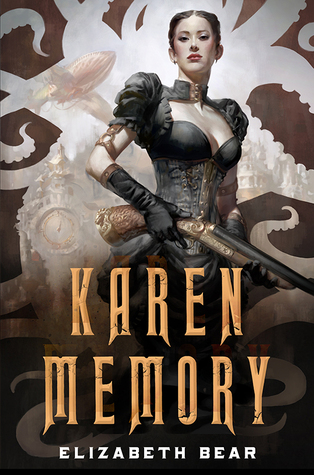
Karen MemortI picked up a copy of Karen Memory, by Elizabeth Bear at my local library (basically because I adored the cover).

Description from Goodreads:
“You ain’t gonna like what I have to tell you, but I’m gonna tell you anyway. See, my name is Karen Memery, like memory only spelt with an e, and I’m one of the girls what works in the Hôtel Mon Cherie on Amity Street. Hôtel has a little hat over the o like that. It’s French, so Beatrice tells me.”

Set in the late 19th century—when the city we now call Seattle Underground was the whole town (and still on the surface), when airships plied the trade routes, would-be gold miners were heading to the gold fields of Alaska, and steam-powered mechanicals stalked the waterfront, Karen is a young woman on her own, is making the best of her orphaned state by working in Madame Damnable’s high-quality bordello. Through Karen’s eyes we get to know the other girls in the house—a resourceful group—and the poor and the powerful of the town. Trouble erupts one night when a badly injured girl arrives at their door, begging sanctuary, followed by the man who holds her indenture, and who has a machine that can take over anyone’s mind and control their actions.  And as if that wasn’t bad enough, the next night brings a body dumped in their rubbish heap—a streetwalker who has been brutally murdered.

Bear brings alive this Jack-the-Ripper yarn of the old west with a light touch in Karen’s own memorable voice, and a mesmerizing evocation of classic steam-powered science.

Review:
This was a really quite enjoyable Wild West, Steampunk, Mystery Adventure. Yep, all those things. The narrator, Karen, has a very distinct, first person voice and I appreciated that the book even came around at the end and gave a reason for the first person narration. That’s balm to my soul that. It’s a pet peeve of mine to read first person POV and not know why I’m ‘being told the story.’

The book is also wonderfully diverse. There are characters of different races, nationalities, sexualities, and abilities. Several have prosthetic limbs, one blithely keeps a ‘pecker’ under her dress and several, despite being sorely uneducated, are still quite clever. It’s a quite endearing mix. I enjoyed this aspect of the book quite a lot. Probably just as much as I adored the fact that this is sewing machine mecha (just stop and imagine that for a moment) and that there are men and women working together without any underlying sexual tension. How rare is that?

However, I found the book quite slow. Plenty of action happens, but Karen’s narrative style means that it is all just sort of relayed to the reader in a somewhat flat manner. It mutes some of the effect, I think. Don’t get me wrong, I loved the way that same narrative tone highlighted her pragmatism about her profession and position. So, this was a bit of a double-edged sword. But it did mean there where times I found picking the book back up a bit of a chore.

Additionally, there are more than a few convenient coincidences that allow the plot to progress. Like meeting an airship pilot just hours before the characters suddenly had need of an airship. It felt contrived.

Despite my few complaints, I basically really enjoyed the characters and therefore their story. (I should probably note, just for accuracy’s sake, that the book’s description calls it a “Jack the Ripper yarn,” but other than murdering prostitutes it doesn’t have anything to do with that Jack. I might have accepted Jack the Ripper-like, but it’s not a “Jack the Ripper yarn.”)

The Unleashing

Book Review of The Unleashing, by Shelly Laurenston

The UnleashingI received an ecopy of The Unleashing, by Shelly Laurenston from Netgalley.

Description from Goodreads:
Kera Watson never expected to face death behind a Los Angeles coffee shop. Not after surviving two tours lugging an M16 around the Middle East. If it wasn’t for her hot Viking customer showing up too late to help, nobody would even see her die.

In uncountable years of service to the Allfather Odin, Ludvig “Vig” Rundstrom has never seen anyone kick ass with quite as much style as Kera. He knows one way to save her life—but she might not like it. Signing up with the Crows will get Kera a new set of battle buddies: cackling, gossiping, squabbling, party-hearty women. With wings. So not the Marines.

But Vig can’t give up on someone as special as Kera. With a storm of oh-crap magic speeding straight for L.A., survival will depend on combining their strengths: Kera’s discipline, Vig’s loyalty… and the Crows’ sheer love of battle. Boy, are they in trouble.

Review:

INTERESTING CHARACTERS SEEKING PLOT TO PERFORM IN
Must be action packed and accepting of humour, violence and dogs.

This book is a mess. It has so much potential though. The idea is interesting. The characters, though shallow and undeveloped, are funny. The world, though inconsistent, could support a series. The first chapter sets the book on the right path, even if it does deviate immediately. There is material here to make something great.

Despite all of this, the book is a dud. Why? Because the closest thing it has to a plot, beyond ‘hey, here is a woman and here are a lot of volatile, hostile, RANDOM people she meets one day,’ comes out at 88% and is only introduced before the book ends on a cliffhanger. In other words, this whole 400-page book is essentially a prologue and not even a very good one.

In the introduction, the author states

…The first book in my new series, Call of the Crows, and right off the bad, I want you to understand that this is not a rewrite of an old book nor is it a fleshing out of an old book. The Unleashing is a brand-new book and series, with brand-new characters, brand-new locale, and brand-new trouble. Although my book Hunting Season, which has been out since 2005, was the start of this idea…The Unleashing is me taking the whole thing to the next level, and it’s a definite stand-alone.

I mention this because I think the author doth protest too much and, though she may believe it, I don’t. Or rather, either this book does depend on the previous book to support this book’s world-building or this book’s world-building isn’t very well developed.

Here is an example. At one point two Crows are discussing their wings. One (Annalisa) states it took her wing 6 months to come out. The second (Maeve) said her’s took a year. Kera has been with the Crows 2 or 3 days, but someone decides her wings need to come out now. So, she arranges for the man Kera likes to accidentally walk in on her without a shirt on, somehow thereby forcing the wings to emerge.

But I sat there wondering how that worked. If one character waited 6 months and another a year, then is there something biological that needs to be waited on to develop wings? If not, if it’s just the odd hunching movement a woman would make to cover her breasts when walked in on that forces ones’ wings out, then why would other characters wait so long instead of just being taught how to get their wings? It makes no sense and isn’t explained at all. I mean this in the sense that the author doesn’t even try to explain it and as a reader I had no idea why or how a Crow’s wings come into existence. I was left wondering if it’s explained in The Hunting. I wondered this on several occasions.

This lack of teaching was a constant irritant to me. I understood that the Crows were supposed to be wildcards that didn’t do well with too much structure. But how is a 1,300-year-old institution supposed to survive if newcomers are treated with such open hostility, told NOTHING about their situation and literally expected to be able to fly without a word of instruction? (Especially when also being told repeatedly, “You can always trust a fellow Crow.” Um, pretty sure I saw no evidence of that.) It felt very much like all of the slapstick results of Kera’s lack of appropriate mentoring were only there for the laugh. Like, “Oh, look a topless woman is having a cat fight. Ha, ha, ha…” (And this after she already kicked some serious ass while naked.) Meh.

The book also starts with Kera waking up and being an awesome asskicker. I had such high hopes for the book at this point. That asskicker doesn’t show back up until around 85%. The whole rest of the time Kera just wonders around meeting random, vapid Crows more concerned with the thickness of Kera’s thighs than fighting, doing completely random things and falling gracelessly in love with Vig. And while there was a lot of humour in these women’s shallow comments and ridiculous antics, it’s all POINTLESS and often over played.

It was kind of like seeing Kera join a homicidal sorority (of the Legally Blond variety). And with the Ravens having conversations like this:

“Is pussy really worth what you’re about to do?” the Raven leader asked.
Vig’s brow furrowed as he immediately replied, “Yes, it is.”
“He’s right,” Stieg agreed. “It is.”
“Totally worth it, dude.”
“He’s right, bruh. It’s absolutely worth it.”
“I can’t believe you’re actually asking the question.”

the Raven’s feel disturbingly like a gang of marauding frat boys. (And you’re guess is as good as mine about how many people are involved in that discussion. It’s no clearer in context than in a floating quote.)

Then there is Vig, the love interest de jur and another inconsistent character. He’s said to be scary and dangerous. But we’re shown a quiet, introverted, nice guy. Don’t get me wrong, I liked him. He’s cute. But despite everyone saying how frightening he is, no one, not one single person, shows any fear of him and not once does he do anything to support this assertion.

There are also about a million faceless Crows. You are constantly meeting new ones and losing track of others. And in this endless flow of Crows you get a barrage of wealthy, successful, famous people. After a while it became cheesy (and not the good kind), as if each new famous face is only there for the effect instead of any importance.

All in all, I found this a weak, plotless Urban Fantasy that leans far too heavily on its attempt to be sharp and witty. Its effort is too apparent. It’s trying too damned hard and therefore fails miserably. The writing itself is fine (except for the constant head-hopping), the editing passed muster, and I appreciated having a POC as a main character (as well as most of the female side characters) but I have no desire at all to continue the series.

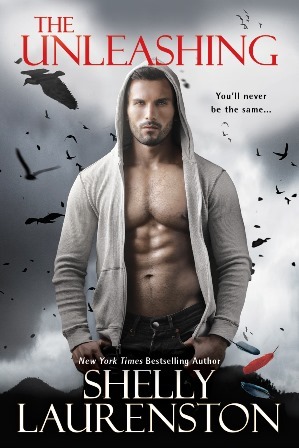
A note on the cover: I have to ask, considering the book is about a woman (Kera) as she joins and adjusts to an all female fighting unit, why is there a man on the cover? I assume it’s mean to be Vig, but he’s not the main character, so why does he get to be on the cover? It seems to be putting the emphasis on the wrong character.