Category Archives: Challenges

Ash and Echoes

Book Review of Ash and Echoes (Blessed Epoch #1), by Augusta Li

Ashes and EchoesI bought a copy of Augusta Li‘s Ashes and Echoes from the publisher (Dreamspinner).

Description from Goodreads:
For the past few years Yarroway L’Estrella has lived in exile, gathering arcane power, but that power came at a price. Now it’s time for him to do his duty: his uncle, the king, needs him to escort Prince Garith to his wedding, a union that will create an alliance between the two strongest countries in the known world. But Yarrow isn’t the prince’s only guard. A whole company of knights is assigned to the duty, and Yarrow’s not sure he trusts their leader.

Knight Duncan Purefroy isn’t sure he trusts Yarrow either, but after a bizarre occurrence during their travels, they have no choice but to work together—especially since the incident also reveals a disturbing secret, one that might threaten the entire kingdom. But will it ultimately work in their favor?

When a third member joins the precarious alliance, it seems to cement the bonds between all three men. But the arrangement isn’t perfect: Yarrow knows the power inside him and fears getting too close. The mysterious newcomer was raised to believe love and trust are weaknesses. And Duncan struggles to accept them as they are. Saving their home will take everything they have—including the fragile relationship they’ve built.

Review:
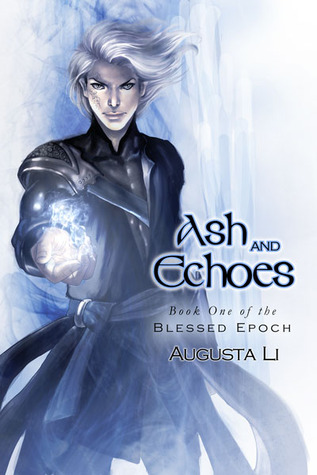
I found this book to be a disappointment. It’s unfortunate too, because it has (or suggests it has) so many elements I love. I’m attracted to well drawn covers (not the horrid CG things so many authors use, but actual art) and this one has a very pretty cover. Fantasy. Check. Demonic possession. Check. Moral ambiguity. Check. A threesome. Check. Strong, dangerous men. Check. Looking at it from the outside, I really should have loved this book. But I just didn’t and I didn’t half because of objective quality reasons and half because I don’t like the type of book it turned out to be.

Let me clarify. On the objective side, I found the writing and dialogue very stiff. There was no natural progression of feelings between the men. It’s not insta-love or insta-lust, but from one page to the next they went from disliking in one case and hating in another (remember there are 3 of them) to lust and then almost immediately to love. And these are men who generally claim not to be able to love. One won’t allow it because of his demon, another has been trained not to feel emotion and the last puts his duty first, so love is not an option. But they all fall hard and fast. Even homosexuality being illegal and a three-way relationship being socially unheard of weren’t hurdles to them.

For three otherwise emotionally closeted men, they all spewed unfathomable amounts of open praise and adoration. It felt out of character for the men presented. In fact, none of the characters are particularly consistent, often acting in ways that they shouldn’t according to their character, as described. Yarrow was especially bad about this.

Ages were never defined. I needed this information since Duncan is said to be older and looks on Yarrow and Sasha as almost boys. This is a tad disturbing since Yarrow, who I’m guessing is in his late teens, maybe early twenties (but I’m leaning toward teens) lost a lover named Rini, who he consistently describes along the lines of ‘my Emiri boy.’ And since Yarrow’s history shows underage sex isn’t off the table in the book, I started imagining Rini as a tween. (It kind of squinked me out.) But also, I just needed to know how to visualise the men—teens, young men, middle-aged, old. It left my imaginings of them vague at best.

The three-man relationship often felt awkward. Scenes built for two were stretched to include a third and it felt a bit like a wobbly wheel. I didn’t even find the sex scenes, as written, erotic.

The world-building, while elaborate didn’t make a lot of sense. The multitude of goddesses worshiped by a strictly patriarchal society. A vague history that forbade mages to rule, but no real depth to it. No placement of mages in the society at large, meaning I had no understanding of the magic system. No placement of demons (if that’s what Yarrow has) in the pantheon, so no way to understand it’s existence, etc.

On the more personal side of things, I’m not into those books where characters constantly tell one another how wonderful, special, beautiful, sexy, amazing, important, awe-inspiring, handsome, enticing, smart, strong, loyal, etc, etc, etc, etc, etc, etc, etc, etc they are and that is exactly what most of this book is.

For one, people, especially men, don’t tend to be so effusive so it NEVER feels natural and believable. Two, it’s cringe-worthy. I can’t tell you how many times I just plain rolled my eyes at this book. Three, it’s repetitive. Four, it ruins a sex scene. Five…five, gag. It just makes me gag and there was just so darned much of it. I don’t like it in general. I sure don’t like it from men I’ve been told are (or have previously been) absolutely, 100% not the sort of men to engage in such conversations and declarations.

Lastly, I didn’t like the book’s ending. So, for another reader this book might be a hit. It was not for me.

Review of The Thief Who Pulled on Trouble’s Braids (Amra Thetys #1), by Michael McClung

The Thief Who Pulled on Trouble's BraidsI snagged a copy of Michael McClung‘s book, The Thief Who Pulled on Trouble’s Braids, from the Amazon free list. At the time of posting, it was still free.

Description from Goodreads:
“They butchered Corbin right out in the street. That’s how it really started. He was a rogue and a thief, of course. But then, so am I. So when he got himself hacked up in front of his house off Silk Street, I decided somebody had to be made to pay. They thought that they could just sweep him away like rubbish. They were wrong.”

Amra Thetys is a thief with morals: She won’t steal from anybody poorer than she is. Fortunately, anybody that poor generally doesn’t have much worth stealing! But when a fellow thief and good friend is killed in a deal gone wrong, Amra turns her back on burglary and goes after something far more precious: Revenge.

Review:
I’m feeling blessed; I’ve had such good luck in the book department lately! The Thief Who Pulled on Trouble’s Braids is a fun Sword & Sorcery book with a kick-butt heroine, a cool mage sidekick (maybe hero), and an interesting fantasy world. I enjoyed the read immensely. It was well-written, sarcastic, funny, and wrapped up nicely in the end. A+, in my opinion.

I was a bit confused about why Amra took it upon herself to avenge Corbin’s death. They were friends, not lovers, so it seems a bit extreme. The reasoning that she’s doing it because she has so few friends proved unsupported by the book. Her endeavor was successful solely because she seemed to have so many loyal, generous friends. So, I was left scratching my head about the very foundation of the book’s plot but decided to just roll with it.

I also thought that the ‘oops, sorry, I was wrong’ was glossed over. Several people died as a result of this particular mistake, those who lived would have a terrible memory, and it brought everyone to the attention of some really dangerous people. But no one seemed to mind, nor was anyone less inclined to take her word at face value when next she said, ‘Oh, I know who did it.’ It all felt a little too easy.

Easy is my last comment. For all the drama, running around, and highly dangerous enemies Amra battles, each was defeated with startling ease at the end. It left the encounters feeling rushed and abortive.

Having said all that, I really did enjoy it, and I hope to read the sequels soon.

Brood of Bones

Book Review of Brood of Bones (Lady of Gems), by A.E. Marling

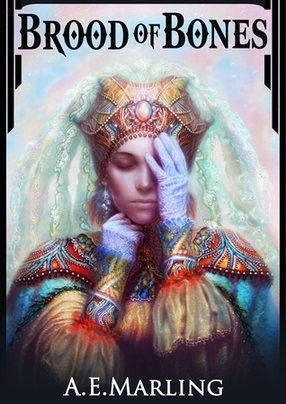
Brood of BonesBrood of Bones, by A. E. Marling has been on my radar for a while, because the cover is so darned eye catching. So, when I saw it on the Amazon free list a while back I grabbed it. Perhaps it is permafree, as at the time of posting it was still/again free.

Description from Goodreads:
Cursed with endless drowsiness, Enchantress Hiresha sleeps more than she lives, no time to marry and raise a family. From virgin to grandmother, all the women in her city have conceived. A lurking sorcerer drains power from the unnatural pregnancies. The only person uncivilized enough to help is the Lord of the Feast, a dangerous yet charming illusionist.

Review:
A pleasant surprise in that it lived up to my expectations. Hiresha wasn’t a particularly relatable character, being painfully blunt, but I quite liked her. Maid Janny and the bodyguard (whose name I won’t even try to spell) were wonderful sidekicks. And the Lord of the Feast was an interesting maybe-ally/maybe-enemy/maybe-more character. I quite liked him and his quandary.

The world was engaging and, while not deeply described, there was enough detail to understand it. The writing was quite readable and there is some unexpected humour.

I was a bit confused about Hiresha’s age. It’s never clarified beyond nearing the end child bearing age (she wants children and is starting fear she’ll never be able to have them) and too old for someone who wants a sweet young thing to want to rape her. But I’m guessing mid-late 30s. Old enough to have reached provost level at the university.

Her age matters to me because I’m also wondering how she managed to essentially buy the town. She was born poor, chosen to become and enchantress, I assume makes a lot of money as one (but for how long) and donated a wall to the town. But everyone seems to know her and treat her like royalty and I was never entirely sure why, especially since she hadn’t been back in a dozen+ years.

The concept of wearing 27 dresses, even if enchanted to be light, also wore on me in it’s ridiculousness. (Ha, that pun wasn’t intended.) It was never suggested that this was somehow required of her position, so I never quite understood it. Using clothing to emphasise her position and bolster her self-esteem, sure but trap herself in a cage of cloth, why?

I also found all the references to moving the dresses and almost passing out from heat exhaustion repetitive. Plus, (personal pet peeve) she almost never took them off, even sleeping in them. Ummm, when did she bathe? Not once in the whole book. Did she have an enchantment for this?

I did think it dragged a little as the reader goes through each deductive step of the investigation with Hiresha. But I also appreciated seeing her utilise her intelligence to solve the mystery.

All-in-all, I had a few complaints, but it was an enjoyable read and I’m hoping to get my hands on the sequels.