Category Archives: Challenges

The Prince’s Boy

Book Review of The Prince’s Boy, by Paul Bailey

The Prince's BoyI won an ARC of Paul Bailey‘s novel, The Prince’s Boy from Goodreads.

Description:
In May 1927, nineteen-year-old Dinu Grigorescu, a skinny boy with literary ambitions, is newly arrived in Paris. He has been sent from Bucharest, the city of his childhood, by his wealthy father to embark upon a bohemian adventure and relish the unique pleasures of Parisian life. 

An innocent in a new city, still grieving the sudden loss of his beloved mother Elena seven years earlier, Dinu is encouraged to enjoy la vie de Bohème by his distant cousin, Eduard. But tentatively, secretly, Dinu is drawn to the Bains du Ballon d’Alsace, a notorious establishment rumoured to offer the men of Paris, married or otherwise, who enjoy something different, everything they crave. It is here that he meets Razvan, a fellow Romanian, the adopted child of a man of refinement – a prince’s boy – whose stories of Proust and other artists entrance Dinu, and who will become the young man’s teacher in the ways of the world. 

At a distance of forty years, and written in London, his refuge from the horrors of Europe’s early twentieth-century history, Dinu’s memoir of his brief spell in Paris is one of exploration and rediscovery. The love that blossomed that sunlit day in such inauspicious and unromantic surroundings would transcend lust, separation, despair and even death to endure a lifetime.

Review:
In some ways this was a wonderful book, in others it was pompous—trying far too hard to be what it is. In the wonderful column are a host of colourful characters, a strong, abiding love and some great writing.

However, I struggled to really get into the narrative. I found the dialogue almost unbearably stiff. It was purposefully so, for sure, since the characters are mostly of the upper-crust and thus constrained by the dictates and decorum of polite society. But I still found it unnatural to read.

The whole thing felt very much like a poorly done costume drama, set in the mid twenties. It tries so hard to be Paris in the 20s that it just comes off as an archetype of that time and place, rather than a believable story set there. Everyone is fashionably morose, maudlin and mawkish, voguishly liberated, libatious, and lascivious (or not), etc. Alternatively, perhaps it was striving to mimic the gravitas of the literary greats Dinu is so found of reading. But, again, it just felt forced.

I did appreciate that, while there are small joys here, this is an incredibly sad story and Bailey has allowed his characters the freedom to wallow in it. He never gives in to the popular pressure to provide everyone a sacrosanct happy ending. I also found something immensely gratifying in considering how The Prince’s gift to his boy was also so very cruel, though Razvan could never regret receiving it. It’s a testament to the duplicity of human nature, for sure.

I think that there is a lot to recommend this book to the right reader. I just don’t know if I was that reader.

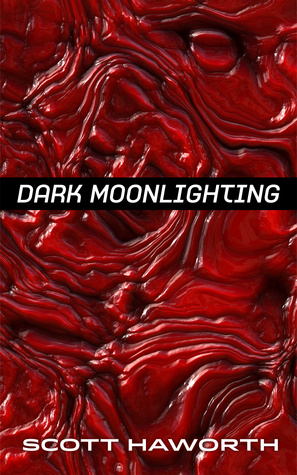
Dark Moonlighting

Book Review of Dark Moonlighting, by Scott Haworth

Dark MoonlightingAuthor, Scott Haworth sent me a copy of Dark Moonlighting.

Description from Goodreads:
Nick Whittier, having been alive for six centuries, has had plenty of time to master three professions. In a typical week he works as a police officer, lawyer and doctor and still finds time to murder someone and drink their blood. He used to feel guilty about the killings, but now he restricts himself to only eating the worst members of society. Few people in Starside, Illinois seem to care about the untimely deaths of spam e-mailers, pushy Jehovah Witnesses and politicians. However, the barriers between Nick’s three secret lives start to crumble when a mysterious man from his past arrives in town seeking revenge. Nick must move quickly to prevent the three women in his life, and the authorities who are hunting him, from discovering his terrible secret.

Review:
Dark Moonlighting is a bit hard to review. It’s satire and as satire it’s quite funny. If I hadn’t known going in that it was meant to be sarcastic, I’d probably be accusing the author of having the sense of humour of a 5th grader, but as purposeful humour it’s pretty good. I’d recommend the book for anyone who’s familiar with or has a love for TV cop and medical dramas.

The problem is that the joke got old at about half way through the book. At about that point, two things happened roughly simultaneously. One, the jokes (for lack of a better word) became predictable and thus lost their lustre, and two, the satire went from being relatively subtle to openly interacting with/through the characters and story. This made the whole thing feel slapstick and clumsy instead of cleaver and satirical (even when some of this same clumsiness was, in itself, a satire). Dr. Condo and the FBI agents were especially heavy-handed and groan-inducing.

The writing is pretty good. I found it to be well edited. I enjoyed the autobiographical nature of the story and especially liked the ending. All and all, an enjoyable enough book, even if I preferred the first half to the second.
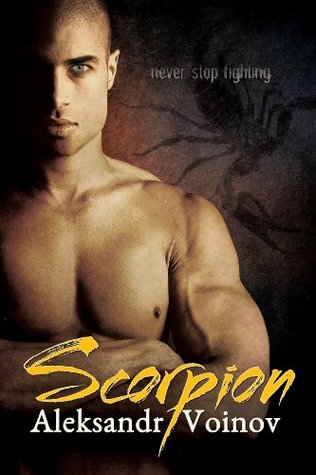
Book Review of Scorpion (Memory of Scorpions #1), by Aleksandr Voinov

ScorpionI bought a copy of Aleksandr Voinov‘s Scorpion.

Description from Goodreads:
Kendras is a casualty of war: injured, penniless, and quite possibly the last surviving member of the only family he’s ever had—the elite fighting force known as the Scorpions. When a steel-eyed mercenary offers him medicine and shelter in exchange for submission and a secret task, Kendras has no choice but to accept. He is a Scorpion; he’ll do whatever it takes to survive.

But his true goal is to rebuild the Scorpions. Neither Steel’s possessive nature nor Kendras’s shattered foot can keep him from finding the last of his brothers, or the mysterious leader of the Scorpions, the man who held Kendras’s heart long before Steel tried to take it for himself.

The goal is simple, the situation anything but. To rescue his leader and escape from Steel for good, Kendras must fight through a morass of politics and intrigue where enemies may be allies and even allies have hidden agendas. But Kendras isn’t only fighting for his lost lover and tribe—he soon realizes that nothing less than the birth of an Empire is at stake.

Review:
There is plenty to love about this book—lots hard men, loyal soldiers (one of my favourites), hot sex, PoC MCs (I’ve had a wonderful run of these lately), a twisty-turny plot, a little master/slave, some gentle love, more barely scraping adulthood acolytes/novices/servants/etc gagging for it than you can shake a (your) stick at, atmosphere, wonderfully descriptive writing, good editing, etc. A lot to love. It’s dark and gritty, with an ending that I suspect only seems happy(ish). Yep, lots to love.

I thought the beginning was a little shaky, but it stabilised satisfactorily. And while I know this isn’t meant to be set in the modern west and thus can’t be expected to live by our mores and customs, I did think the pervasive sexual victimisation felt overplayed. It’s not that I have a problem with it in a plot; it was just EVERYWHERE here. Every organisation, from the prisons, to the army, to the church, to the nobility seemed to blithely rape or train for ‘service’ their powerless. Thus, most of the characters had been raped at some point, some to more effect than others and many ritualistically (rape being institutionally scripted before X occurs, etc). It’s one of those books in which there only seem to be predators and prey, no…you know…normalish people and that left it feeling monochromatic as a culture.

But the characters were marvellous and there were a lot of small sparkly moments, like Steel’s odd emotional desperation or Widow’s anomalous love or Kendras’ constant low-level want or Sylvan’s ‘weakness.’ Yeah, not a perfect read for me but certainly not one I’m complaining about having spent an evening with. I think ‘yum’ is the appropriate descriptor