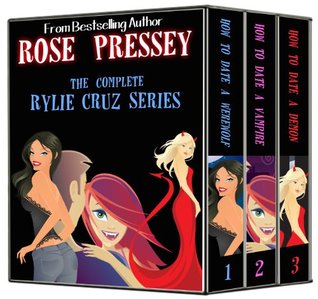
Book Review of The Complete Rylie Cruz Series, by Rose Pressey

The Complete Rylie Cruz Series

I grabbed Rose Pressey‘s first Rylie Cruz novel, How to Date a Werewolf, off the free KDP list. When I saw the compilation on sale for $0.99, I went ahead and bought it so I could finish out the series.
__________________

Description from Goodreads:

How to Date a Werewolf
Romance can be a hairy business–especially when you’re a werewolf.

As the owner of Get a Mate Dating Service, Rylie is more than happy to step in and lend a hand to lonely lycanthropic hearts all over town. No matter how hopeless Rylie might be in finding her own soul mate, she has a knack for helping others find theirs.

Convinced that she is stuck with a family curse, Rylie is positive she will never find her true love. But when drool-worthy Jack Chandler shows up at her door, Rylie wonders if maybe the curse is finally broken.

But Rylie’s life is about to become complicated courtesy of the after-dark crowd. When she begins receiving strange notes and harassment from a jilted client, events careen out of control.

Jack knows she’s more hassle than he can handle. What he doesn’t know is whether she’s seriously in trouble . . . or simply delusional.

How to Date a Vampire
Dating a vampire doesn’t have to suck.

Rylie Cruz is the owner of Get a Mate dating service. Her specialty is matching up paranormal folks. Thinking that a curse placed on her is finally broken, Rylie hopes that her love life is headed in the right direction.

Not so fast.

Rylie has finally convinced her hunky psychiatrist boyfriend, Jack Chandler, that
she isn’t crazy and is actually a werewolf. But after a little scuffle with temperamental vampires, Rylie must now convince Jack that he may be a part of the paranormal club.

How to Date a Demon
A Match Made in Hell

Rylie Cruz loves playing matchmaker. She even does it full-time at her matchmaking service, Get a Mate. Since she’s a werewolf, she feels that gives her expertise when dealing with the paranormal crowd.

When Rylie’s best friend, Jennifer Matthews, asks her to set her up on a date, Rylie is hesitant. Jennifer hasn’t had luck in the dating department lately.

But when a good-lucking man shows up looking for a date, Rylie thinks Jennifer might be his perfect match. The date turns to hell though when Jennifer displays outrageous mood swings and a new shocking fashion sense.

When Jennifer disappears, Rylie fears the worst. Things get even stranger when a mysterious demon hunter shows up looking for Jennifer. He claims he wants to help Rylie find her friend. Rylie’s boyfriend, Jack Chandler, is trying to save Rylie from the demon hunter, but she isn’t sure she needs to be saved.

Rylie has to find her friend before it’s too late and Jennifer’s swooped off for a staycation in forever damnation.

Reviews:
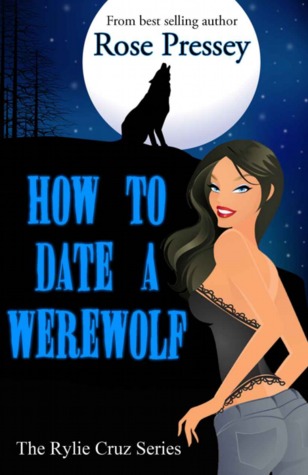
How to Date a WerewolfHow to Date a Werewolf
A cute, clean read that’s basically based on one woman’s attempt to find love amidst a series of embarrassing mishaps. I mostly enjoyed it, but I felt cheated by the way none of the things that made Rylie (and by extension me) mad were resolved. She literally went from ‘I’m sprouting fur I’m so angry’ to ‘it’s ok I don’t mind’ in 2.5 seconds flat, again and again. I mean her best friend seriously stabbed her in the back, repeatedly, and she instantly forgave her without so much as an apology for any of it. Now, maybe that makes Rylie saint-like, but it left me feeling like I’d missed a few pages and some important emotional closure.

I also thought that the werewolves’ forms weren’t very consistent. There were more than a few moments when I wondered about the physiology presented. Examples included werewolves in full wolf form able to pull a gun on someone, throw a bottle or carry a plate. Even if he was smarter than most dogs, I’m fairly sure my pooch’s lack of finger dexterity…or fingers would prohibit him from being able to do these things. So how could a wolf? All in all however, a fun little fluffy distraction.
How to Date a VampireHow to Date a Vampire
Another cute, clean read in the Rylie Cruz series. Like the first book, How to Date a Werewolf, this one is almost completely made up of half-truths, misinterpretations, and withheld information. I actually get incredibly frustrated with this type of plot device. I tire of it easily and this one started to feel really quite slap stick after a while. Why can no one just say “come with me, please, because…” Nope, it all has to be veiled threats and attempted intimidations which, of course, Rylie resists. Who wouldn’t? Similarly, Rylie is constantly being stalked or followed and never once does she just stop, turn around, and say, “What the hell do you want?” Of course, if such straightforward tactics were used the story would be 15 pages long, so maybe I do understand it after all.

Though I mostly enjoyed the story, I did feel that it ended abruptly. It wasn’t a cliff-hanger, but there were quite a few open threads and the ending felt clipped. I actually flipped back and forwards to ensure I hadn’t missed a couple pages. Lastly, I notice quite a few more editing mistakes in this one than the first. It was still perfectly readable, but they were noticeable. Despite that, it was a fun little bit of light entertainment.
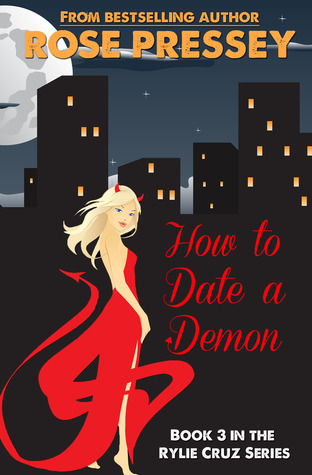
How to Date a DemonHow to Date a Demon
Like the first two Rylie Cruz books, I’ll give this one three stars. But honestly it’s barely hanging in there with a low three, maybe even a high two. It might be because I read the compilation and therefore all three books back to back, but this one began to feel VERY formulaic. So much so that I’d swear Ms. Pressey cut and pasted passages from one book to another! Despite that, I still found disruptive inconsistencies in the story. For example, Jack is referred to as a half-vampire at the beginning of this book, but at the end of book two Quentin turned him from a half-vamp to a full-vamp to save his life. A big deal was kinda made of it. Then at the end of this book he’s referred to as a vampire. So, um, which is it? Or the way, in this book, Rylie’s curse is said to affect the “first daughter born to each man in the Cruz family,” but in the previous books it was the “youngest daughter.” So again, which is it? This kind of thing yanks me right out of a story. As do the typos.

As for the story itself, it was ok. I’m not calling it horrible or anything. But I was just so tired of it all. It began to remind me of the opening credits of a Benny Hill episode, Rylie randomly running from one place to another, usually with someone following her. (Just like in the first two books.) Meh. Then I reached the end and a cheesy cackling baddie who claimed, “You walked right into my trap.” Really? If that’s the case she should have realistically done that on about page 8 and saved me 240 pages of aimlessness. Plus, he/she was defeated really, REALLY easily. Meh.

This is a cute clean series, with a little romance in the first two (not so much in this one). But this one fell down for me. Again, meh. It’s the best I can say for it.
Up for discussion: Short Story vs. Novella vs. Novellette, vs Novel

Books

OK, like so many of my Up For Discussion posts, this one is a bit of a rant. It came around for two reasons.

  1.  I’m not a big fan of the modern novella. I can’t really quibble with a writing format that includes Of Mice and Men, Animal Farm and A Christmas Carol, but I’ve yet to find many modern equivalents that compare. Especially with recent authors’ tendency to end on cliffhangers and serialise. (I could write a rant on that alone.)
  2. Someone finally provided me with an obvious, technical and documented difference between the three.

I may have known the following during my Freshman Creative Writing course, but I’d fully forgotten. So, while I have been consistently annoyed at all the 20 page novellas hitting my review request box or the Amazon free list, I couldn’t quite pinpoint what I was disliking so very, very much about them. In my mind they were wrong—plainly wrong, even if I couldn’t say exactly why.

For simple shelving purposes, I generally considered anything more than 100 pages a novel and anything less a short story, but I had a vague notion that there were more detailed classifications and that surely some of the ridiculously short stories I was encountering couldn’t be novellas or even novelettes. 

Well, thanks to Goodreads member Serendi, who had the forethought of checking some of the better known literary award rules (Science Fiction and Fantasy Writers of America and Hugos), I decided to do a little digging too and found a basic consensus. While there is no official, universally accepted, numerical definition of the difference between short stories, novellas, novelettes, and novels there does seem to be a fairly firm consensus in the literary world.

, from Shiraz University posted an interesting slideshow titled What is a Short Story on academia.edu if you’re interested. But it can basically be broken down like this:

  • Novel, over ~40,000 words
  • Novella, ~17,500 to ~40,000 words
  • Novelette, ~7,500 to ~17,500 words
  • Short story, under ~7,500 words.
  • Flash Fiction, under ~1,000

Taking your average 250 words to the page, that comes to approximately 160 for a novel, 70-159 for a novella, 30-69 for a novelette, and everything below that as a short story (or flash fiction if it’s really short). Again, there is some flex in there; Carsson-Newman College for example, would set the limit between novel and novella at 50,000 instead of 40,000. But I found more similarities than differences as I searched.

My point is that there are fairly set parameters. There are generally accepted definitions to these terms. Authors SHOULD NOT be arbitrarily naming their pieces of work a novella or novelette when it is patently a short story. It’s cheap. It’s cheating. It comes across as a blatant attempt to give your work more gravitas than it deserves.

Now, I’m not trying to disparage short stories. It takes a lot of talent to squeeze a plot and meaningfulness into ~7,500 words. Some might argue that it’s harder. So there’s no shame in being a short story writer. Sure, you can’t call yourself a “novelist,” and that does have such a nice ring to it. It feels heady and heavy. While short storyist doesn’t quite feel the same. But heck, my own book is roughly 250 pages long and I still don’t know if I’d have the balls to call myself a novelist!

I’m just gonna cut loose and be a little snippy here, because what I think when a 15 page ‘novella’ hits my review request list (or I encounter it elsewhere) is that the author is either a faker who wants his/her work to seem more important than it is or doesn’t know the basics of their own art. Neither reflects well on the author.

I don’t write short stories. I don’t write novellas. I’ve never written a novelette or tried my hand at flash fiction. The stories in my head flow for pages and pages and pages. But I look at a 10 page ‘novella’ and sneer. Is this really the response anyone could be seeking from your readers? So I would really, really appreciate it if authors took the time to ensure they labeled their less-than-novel-length writing appropriately. 

Rant over.

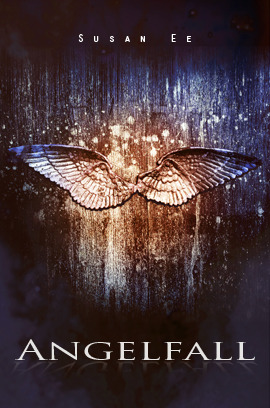
Book Review of Susan Ee’s Angelfall

Angelfall

I picked up a copy go Susan Ee‘s YA novel, Angelfall from the KDP free list.

Description from Goodreads:
It’s been six weeks since angels of the apocalypse descended to demolish the modern world. Street gangs rule the day while fear and superstition rule the night. When warrior angels fly away with a helpless little girl, her seventeen-year-old sister Penryn will do anything to get her back.

Anything, including making a deal with an enemy angel.

Raffe is a warrior who lies broken and wingless on the street. After eons of fighting his own battles, he finds himself being rescued from a desperate situation by a half-starved teenage girl.

Traveling through a dark and twisted Northern California, they have only each other to rely on for survival. Together, they journey toward the angels’ stronghold in San Francisco where she’ll risk everything to rescue her sister and he’ll put himself at the mercy of his greatest enemies for the chance to be made whole again.

Review:
I thought that this was a pretty good read. There were some really great parts. Such as the paranoid schizophrenic mother who forced her daughter to take numerous self-defence classes, in case the daughter should ever need to defend herself from HER. That does something moving to my insides. I also liked Penryn and Raffie, as well as Obi and his crew.

I did occasionally wonder where all the normal people were. I mean there had to be a few non-homicidal or non-victimised people out there. There just had to be. But Penryn only seemed to meet up with potential murders or completely broken people. That didn’t feel particularly realistic to me. Sure there’d obviously be some, even a lot, but EVERYONE?

That’s a small quibble though. I only have two real complaints. One is that the whole thing had a bit of a ‘we did this, then I did this, and then this happened’ feel to it. This is often hard to avoid with any first person, present tense narrative, but I REALLY felt it here. What’s more, it felt very much like we were JUST getting an accounting of what Penryn was doing, without feeling like it was also leading up to anything. It felt like it just so happened that this minute to minute accounting of her life occurred in the midst of a post-apocalyptic dystopian future, as opposed to this future angelic war zone and her contributions to it being pivotal to it in any way. Interesting, but unimportant to the whole. I’m not saying that was the case, just that it felt that way.

The second is that the question of WHY is never addressed. It’s a bit like reading a novel set during D-Day without anyone knowing or telling the reader what World War II was about or why June 6th, 1944 was important. This lack of understanding stole a bit of the gravity from the story.

On the whole, however, I read it in a day and enjoyed it. I’d even be interested in picking up the sequel at some point.