 I blog about books. I do this for the sheer joy of it and part of that joy comes from doing other authors a good turn. Because make no mistake, if I review your book on request I am doing you a favour. I am passing up the opportunity to read any number other books. Books I’ve chosen because they appeal to me. Books I may, perhaps even will probably, like more than yours for just that reason. Books that sit unread because I am kind enough to take requests, your requests.
And, while I don’t expect to be cajoled or senselessly flattered, I do expect to be treated with the respect due someone doing something nice with very little expectation of return. I expect to be allowed the power in this particular relationship. I expect to be the boss. And I don’t think this is unreasonable of me.
That’s why I’m always surprised and a little appalled when I get emails from authors who forget (or maybe never knew) this. I’m going to illustrate this point with a series of brief emails I recently exchanged with an author who shall remain nameless. (Though, not doubt, they’ll recognise themselves.) The issue really comes in at the end, but it won’t make a lot of sense without the background of the proceeding exchanges. It started out with a pretty standard email request.
Hi there Sadie,
I read your policy on your blog and I have to say that I have no time frame for my novel to be reviewed. Whenever you can do it is fine (if you decide to that is). I understand how busy people can get. I can go months without reading and then read loads in a small block. Life is funny like that. Below is all the bits of info you need. I’ve also attached a mobi file of my novel.
 Good job so far. It’s personalised, even goes on to create a little rapport and ensures that I know they read the policies. (You’d be surprised how many obviously haven’t, as they don’t follow the directions. I ignore these BTW. If you can’t be bothered to read and follow the directions, I can’t be bothered to correct you so that I can read your book. That onus is on you.) Granted, there is no actual request in there, but that’s fine. It’s implicit. I get that. No problem. Why else would they be emailing me?
The email went on to include all of the requisite information–page length, genre, blurb, etc. I like having that. I appreciate it. Thank you. If this had been the only communication between the author and myself I wouldn’t have thought anything about it. But the whole thing fell down when they failed to attach the Mobi file. Now, this is a mistake. A mistake we’ve all made at least a million times in our lives. No big deal. And since I thought the book looked interesting I shot the author a quick email pointing this fact out to them. In fairness I’ll include my own communications.
Thank you for contacting me about a review of XXX. I’d be happy to add it to my list, however I don’t think the actual mobi file was attached, just a jpeg of the cover.
This is where things started to fall apart, just a little bit, and they didn’t have to.
That’s odd! It says it is there when I’ve opened it. Anyway here it is again. Let me know if it works. I may have to try something else if it doesn’t. Thank you so much for agreeing to read it. I hope you enjoy it.
There is a thank you in there, so I’m all good with the politeness. Again it’s always appreciated. The minor problem, which wouldn’t be a problem if it weren’t in conjunction with the next email, which I’ll get to in a minute, is that it suggests that I’m mistaken and the file is actually attached. Shifting blame is unnecessary. It could have been corrected without comment or conceded to. It’s all together possible that some technical mishap resulted in the file getting lost before arriving in my inbox. I don’t know what it could be, but it could happen. But obviously I wouldn’t send an email back unless I’ve checked and double checked that the file isn’t there.
My whole system is set up for a single communication between authors and myself. Anything more than that does two things I dislike. One, it takes a lot of my time. Two, it creates a familiarity that I find clouds my own willingness to be honest in my review. I don’t like disappointing my friends and the more I communicate with you the friendlier I feel about it and the guiltier I feel if I have to give you a poor review. Incidentally there is also an assumption that I’ve agreed to read the book, when I only actually agreed to put it on the TBR list to possibly read. But that’s an easy misinterpretation, so no biggy.
As a social grace I was willing to admit that I may have made a mistake though. So I responded thus,
Worked this time. It’s possible I missed it the first time, though I checked more than once. Either way, all fine now.
 Here is where everything started to crumble for me. Here is where I said, ‘WTF? I don’t work for you.’ And in all fairness it was almost certainly unintentional on the part of the author. Email is the least formal of formal communication and we all know how easily it can be misinterpreted and that we have to be mindful of our tone.
Great! Don’t worry about it. Let me know when you’ve done the review and send me a link to it on your blog. Thanks. If you do author interviews/spotlight etc I would be interested in that if you like my book enough to do it. Take care and thanks again.
Still polite. Great. But there are two major issues here if you stop and think about it. That first sentence, “Great! Don’t worry about it.” is what you say to someone in order to forgive them for inconveniencing you. I should not be treated as someone who was done a favour. Please refer to paragraph one of this very blog post. Multiply it by the value of X since I was kind enough to go to extra effort to make sure I could, in the future, do the favour you are asking me for.
Second, and more to the point, “Let me know when you’ve done the review and send me a link to it on your blog.” is a direct order–not a request, not a solicitation, not a suggestion, an order. I don’t work for anyone any more. I’m not accustomed to being told what to do and, let me tell you, I do not appreciate it. Especially when, again, it breaches my standard single communication rule.
I’m sure this author wasn’t trying to pull a hierarchal coup. They weren’t trying to insult me and they probably weren’t even aware that this single, brief email takes incredible advantage of the goodwill I offer authors. It makes assumptions about the use of my time that they have no right to. It assumes that I am willing and able to remember a special instruction for one of hundreds of requests I receive in a year. It presumes that their book is important enough to deserve special treatment. It isn’t. No one’s is. I treat all request that come to me equally.
So, the point of this post is to…ok part of it is just to vent a little bit, but it’s primarily to remind authors looking for reviews to be as careful of the wording of their requests as they would be in any other professional exchange. Remember that you are seeking favours and, unless otherwise stated, not entering into any kind of obligated contract. Following direction is imperative. Being polite is appreciated. But not assuming you have a right to make demands is too.
 I’ve seen such demands come in any number of forms. Almost always accompanied by a lack of understanding of the book blogger’s process and the effect of the sheer number of request received. Finding reviews is hard work. Finding reviewers who will accept indie and self-published books even harder. Stop and think about how much research it has taken you to find bloggers willing to accept you book. Stop and think again of how many other authors just like you are doing the same thing and then stop and think what it feels like for a blogger to get swarmed by all of you almost everyday. Then stop and remember that to us you and your book are just one of many, many we see.
I don’t mean to diminish how special you or your product are. You are each amazing. You wrote a book after all! But this isn’t the forum to be anything but modest and unassuming. Making demands not only won’t get you what you want it might just compromise the likelihood of being considered at all. The squeaky wheel doesn’t always get the grease. Sometimes it just gets discarded.
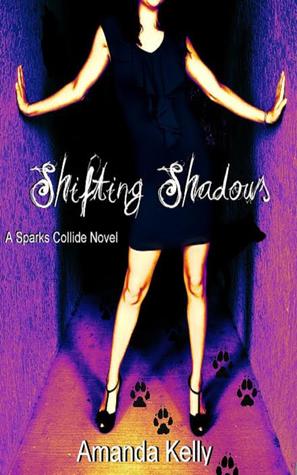
For the record, the above book is still on my TBR. It looks interesting. I’ll probably read it at some point. I’m not trying to pick on or punish this particular author for something tons of authors do in one way or another. (Hell, before becoming a blogger I probably did it myself.) But the point deserved some attention. When you’ve sent dozens, maybe even hundreds of review requests out it can be easy to fall into abbreviated actions that come across as just plain rude on the receiving end. I’m just throwing out one rather long winded reminder of that.