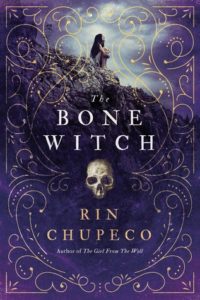
The Bone Witch

Book Review of The Bone Witch, by Rin Chupeco

I received a copy of The Bone Witch, by Rin Chupeco, from Netgalley.

Description from Goodreads:
Let me be clear: I never intended to raise my brother from his grave, though he may claim otherwise. If there’s anything I’ve learned from him in the years since, it’s that the dead hide truths as well as the living.

When Tea accidentally resurrects her brother from the dead, she learns she is different from the other witches in her family. Her gift for necromancy means that she’s a bone witch, a title that makes her feared and ostracized by her community. But Tea finds solace and guidance with an older, wiser bone witch, who takes Tea and her brother to another land for training.

In her new home, Tea puts all her energy into becoming an asha-one who can wield elemental magic. But dark forces are approaching quickly, and in the face of danger, Tea will have to overcome her obstacles…and make a powerful choice.

Review:
How can you be disappointed in a book that is beautifully written? I don’t really know, but I’ve managed it with The Bone Witch. Honestly, the writing and world-building is superb, but there my praise pretty much ends.

This book is 400+ pages long and the only action in the whole darned book occurs at the very beginning when the brother is raised from the dead and at 90%. That’s it. The whole rest of the book is Tea (pronounced as Tey-uh, as we annoyingly discover 67%) learning to be a geisha. Yes, she’s an all powerful bone witch. The only new one in decades, the one desperately needed, as the deava (undead beasts that rampage and kill people) keep popping up and, well killing people and she’s the only one who can do anything about them. But does she? No. In fact, when she asks to, she’s told to not waste time “with any more of these foolish wildgoose chases.” Instead, she learns to sing and dance and make pleasant conversation with her (apparently all) male cliental. That’s right, she’s basically just there for the entertainment of men, as are all asha.

There are things I appreciate about the book. There is some diversity in skin tone and culture. Some gender norms are purposefully challenged, though FAR MORE are passively reinforced. Again, the writing is beautiful. The reveal at the end piqued my curiosity, but I kind of saw it coming. It’s enough to interested me in the next book. But I spent a lot of this one being frustrated with the lack of pace and betrayal of a promise of a strong female lead. She’s stubborn and she is powerful, but I thought that every surrounding detail of the book—from the fashion to the families, to the political structure—undermined female autonomy and strength and reaffirmed women’s (or girls’) secondary position, even when possession an overwhelming ability. Which is not uncommon is fantasy, but I felt I’d been promised something different here. What’s more, I kind of sense the author thought she did write something different.

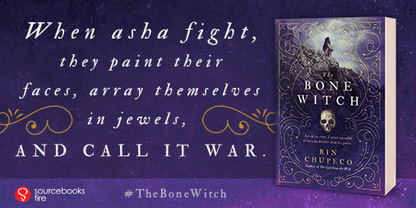
Case and point, an official graphic:
#ReadDiverse2017 update, 10 points

Wow, I feel like I just did the update saying I’d earned my 5 point badge, meaning I’d reviewed 5 books for this particular challenge, and now I’m back with the 10 point badge.

10 point badge for what, you ask? Well, the #ReadDiverse2017, which is hosted by the Read Diverse Book blog, of course. It’s fairly self explanatory, as far as challenges go. The idea is to read and review diverse books.

Eligibility being (and I’m quoting the RDB blog, here):

  1. Books written by people of color or Native/Indigenous Peoples
  2. Books about people with disabilities (physical, neurodiversity, etc.)
  3. Books with LGBTQIA protagonists or about LGBTQIA issues 
  4. Books with practicing Muslim, Jewish, Hindu (i.e. non-Christian) MCs
    • Please prioritize #ownvoices for this category

Marginalized authors take priority for #ReadDiverse2017. At all times, please consider reading books written by POC, Indigenous, LGBTQIA, and Disabled authors, #ownvoices whenever possible.These will always qualify, whether they are #ownvioces or not. If a straight, white, able-bodied author writes a book with a straight, able-bodied POC protagonist, the book will not qualify. UNLESS that book is intersectional. For example, if the protagonist is a POC and Queer or disabled, then the book will qualify. I make this distinction because books with Queer/disability representation are more rare than books with POC/Indigenous rep and there are some great books out there with Queer/disability rep by non-mariginalized authors. I also encourage you to seek out books with plus-sized/fat protagonists, especially if they have other marginalizations, such as plus-sized+POC/Queer/Disabiled.

Now that badges have started arriving I want to take a moment to thank Nazahet Hernandez for keeping this all organized. I’ve really enjoyed the challenge, but I’ve really enjoyed being able to browse everyone’s reviews for inspiration. I don’t know how much more weight my TBR can take though.

Anyhow, earning a ten point badge, means I’ve reviewed ten books qualifying for the challenge. I listed the first five here, when I got the 5 point badge. As a reminder, they were:

  1. Blood Stained Tea
  2. When I’m Bad, I’m Better
  3. Restless Spirits
  4. Kamikaze: Run Rabbit Run
  5. Ansible x 3

The last five books I submitted were:

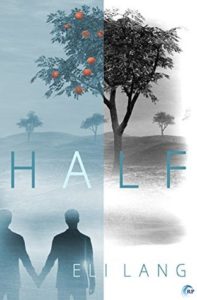
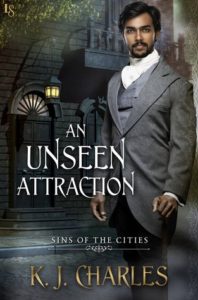
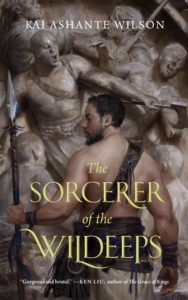
I rather enjoy the badge collecting. Yes, it probably trivializes a rather serious lack of diversity in the publishing industry. I can’t help but be aware of that. But hopefully by bringing attention to the deficit the challenge makes up for making a game out of it. That’s how I’m choosing to look at it, anyhow. Anyhow, I’m off until next time.

Insight

Book Review of Insight (The Community #1), by Santino Hassell

I received a copy of Insight, but Santino Hassell from Netgalley.

Description from Goodreads:
Growing up the outcast in an infamous family of psychics, Nate Black never learned how to control his empath abilities. Then after five years without contact, his estranged twin turns up dead in New York City. The claim of suicide doesn’t ring true, especially when a mysterious vision tells Nate it was murder. Now his long-hated gift is his only tool to investigate.

Hitching from his tiny Texas town, Nate is picked up by Trent, a gorgeous engineer who thrives on sarcasm and skepticism. The heat that sparks between them is instant and intense, and Nate ends up trusting Trent with his secrets—something he’s never done before. But once they arrive in the city, the secrets multiply when Nate discovers an underground supernatural community, more missing psychics, and frightening information about his own talent.

Nate is left questioning his connection with Trent. Are their feelings real, or are they being propelled by abilities Nate didn’t realize he had? His fear of his power grows, but Nate must overcome it to find his brother’s killer and trust himself with Trent’s heart.

Review:
This was a one sitting read for me. I sometimes feel bad when authors work years on a book and I breeze through it in a couple hours, but that’s what I did.

I quite enjoyed Nate and Trent, both are super sweet characters. But since it’s basically an insta-love that isn’t explained, I didn’t really feel their connection. If there had been an explanation for their instant, meaningful attraction I might have bought it more, but as it’s written I didn’t understand Trent’s dedication. He’s wonderful and Nate was lucky to find him, and I understood Nate’s position, but why was Trent so unnaturally attracted?

The mystery kept my attention. I had suspicions, but I didn’t know until the reveal. So, that was nice.

The writing, as always with a Hassell book, is wonderful and I’ll be looking forward to the next book. It’ll be interesting to see how Holden grows and at some point I’d really like to see Uncle Dade’s redemption, though I doubt that’s on the books. God, what a tragic character!